Every e-bike battery label comes down to two numbers: volts and amp hours. Multiply them and you get watt hours (Wh), the figure that tells you how much energy the pack holds and, roughly, how far you can ride on it. Once you can do that one sum, spec sheets stop being a blur and you can compare a fat tyre pedal-assist bike with a 72V off-road e-moto on the same scale.
This guide walks through the maths with real packs we list, explains cells and the battery management system, covers range and care, and says plainly where Electric Dirt Bike Australia (EDBA) can help and where it cannot.
Volts, amp hours and watt hours made simple
Think of the pack as a fuel tank. Volts describe how hard the energy is pushed, amp hours describe how much charge the pack can deliver, and watt hours describe the total energy stored.
The one formula that sorts every battery
Wh = V x Ah. A 48V pack rated at 15Ah holds 48 x 15 = 720Wh. Double the amp hours at the same voltage and you double the energy. Raise the voltage at the same amp hours and you also raise the energy, which is why a 72V 42Ah pack stores far more than a 48V 42Ah one would.
Voltage also tells you which bike a pack suits. Motors and controllers are built around a voltage, so a 48V pack will not simply swap into a 72V bike. That is the first thing to check before you shop.
Worked examples from stocked packs and bikes
Here is the formula applied to bikes and packs in our range, plus one clearly labelled illustration.
| Pack | Volts | Amp hours | Watt hours | Where you find it |
|---|---|---|---|---|
| Stubbie S3 | 48V | 15Ah | 720Wh | Fat tyre pedal-assist e-bike |
| ACE Adventure | 48V | 20Ah | 960Wh | Fat tyre pedal-assist e-bike |
| Illustration only | 48V | 25Ah | 1,200Wh | A larger touring pack |
| Sur-Ron OEM replacement | 60V | 40Ah | 2,400Wh | Light Bee X |
| 72V 42Ah upgrade | 72V | 42Ah | 3,024Wh | Sur-Ron and Talaria upgrade |
The Stubbie S3 carries 48V 15Ah and the ACE Adventure steps up to 48V 20Ah, a third more energy for the extra money.
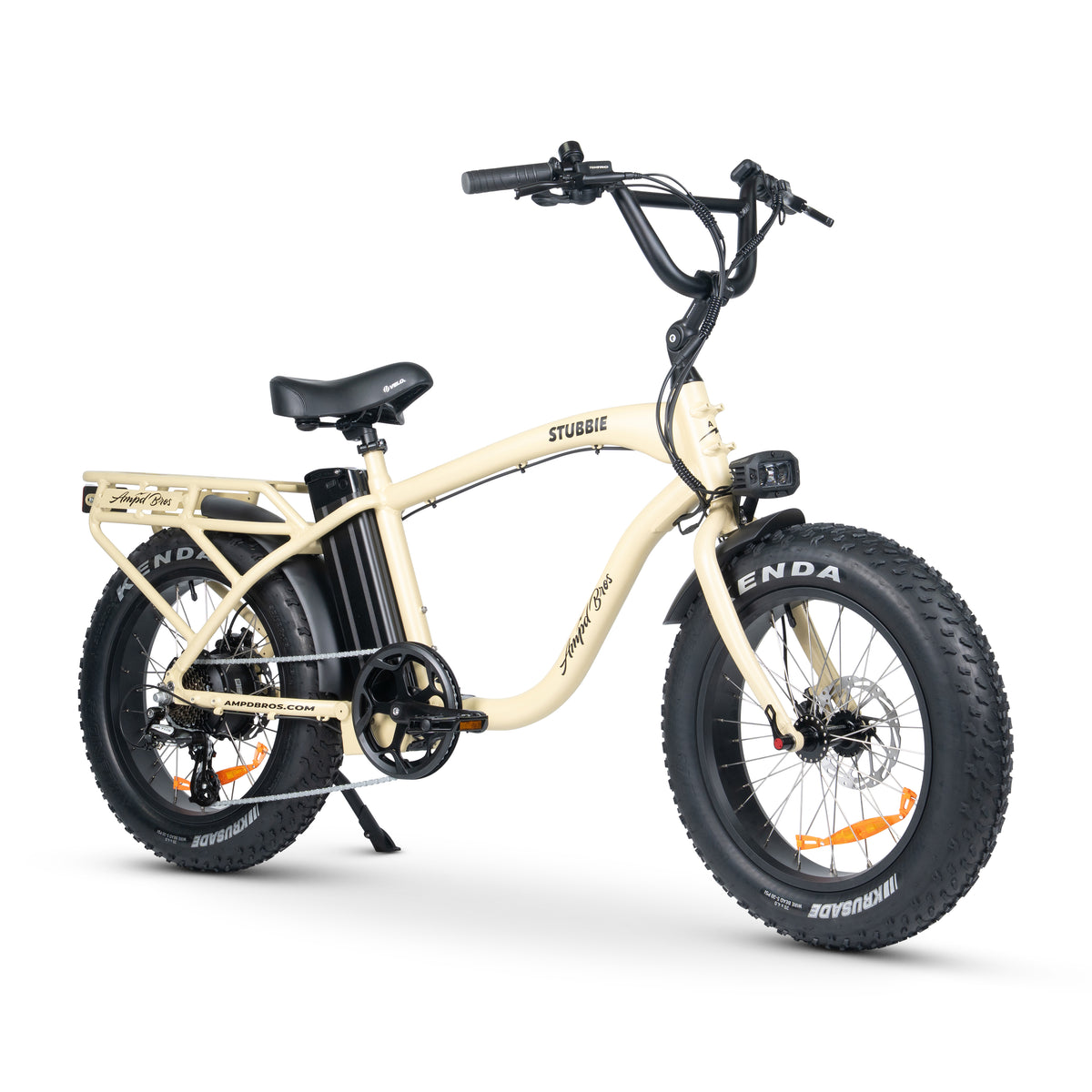
Stubbie S3 Electric Bike (48V 15Ah / 250W)
Ampd Bros fat tyre electric bike with 250W continuous, 48V 15Ah, range up to 60km.
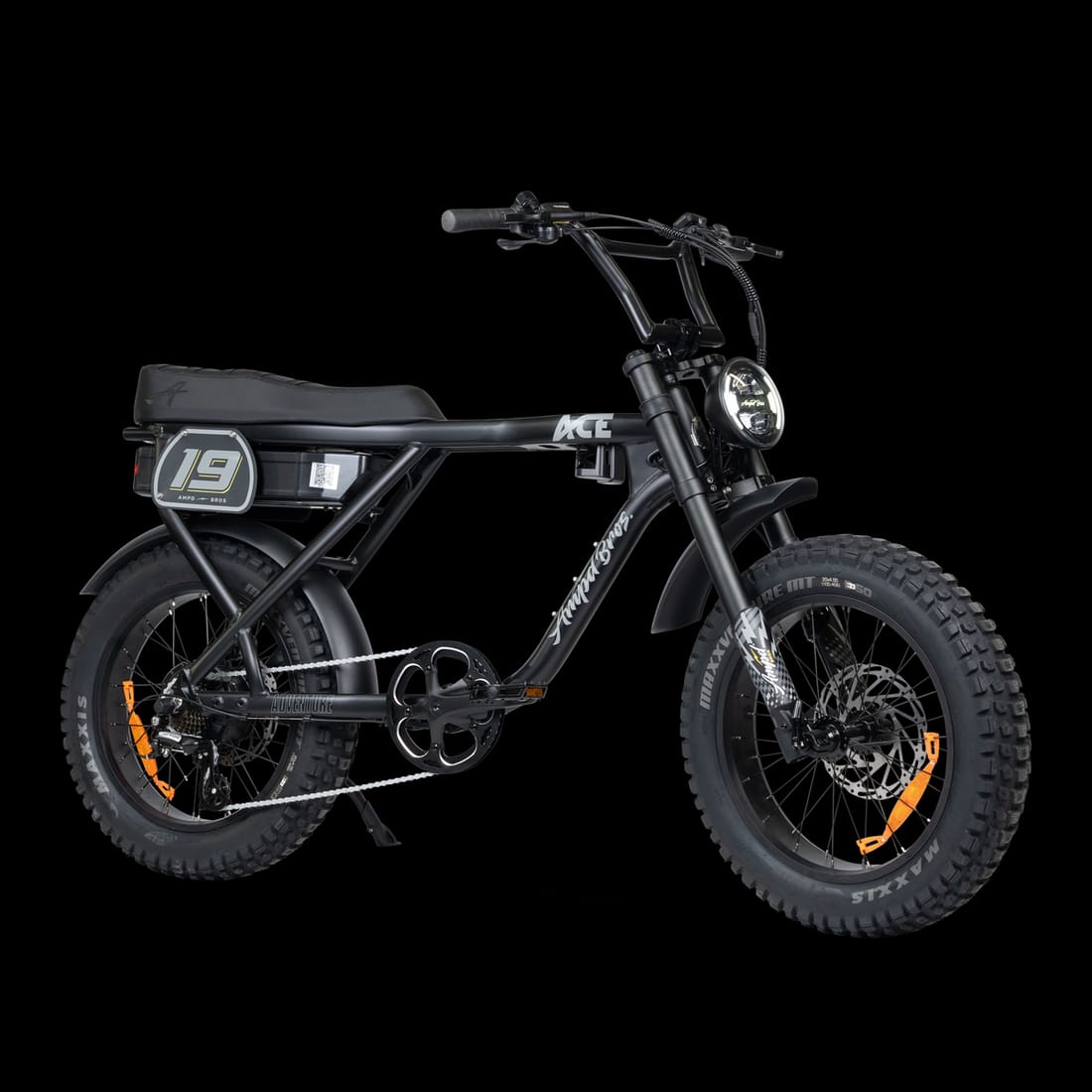
ACE Adventure Electric Bike (48V 20Ah / 250W)
Ampd Bros fat tyre electric bike with 250W continuous, 48V 20Ah, range up to 80km.
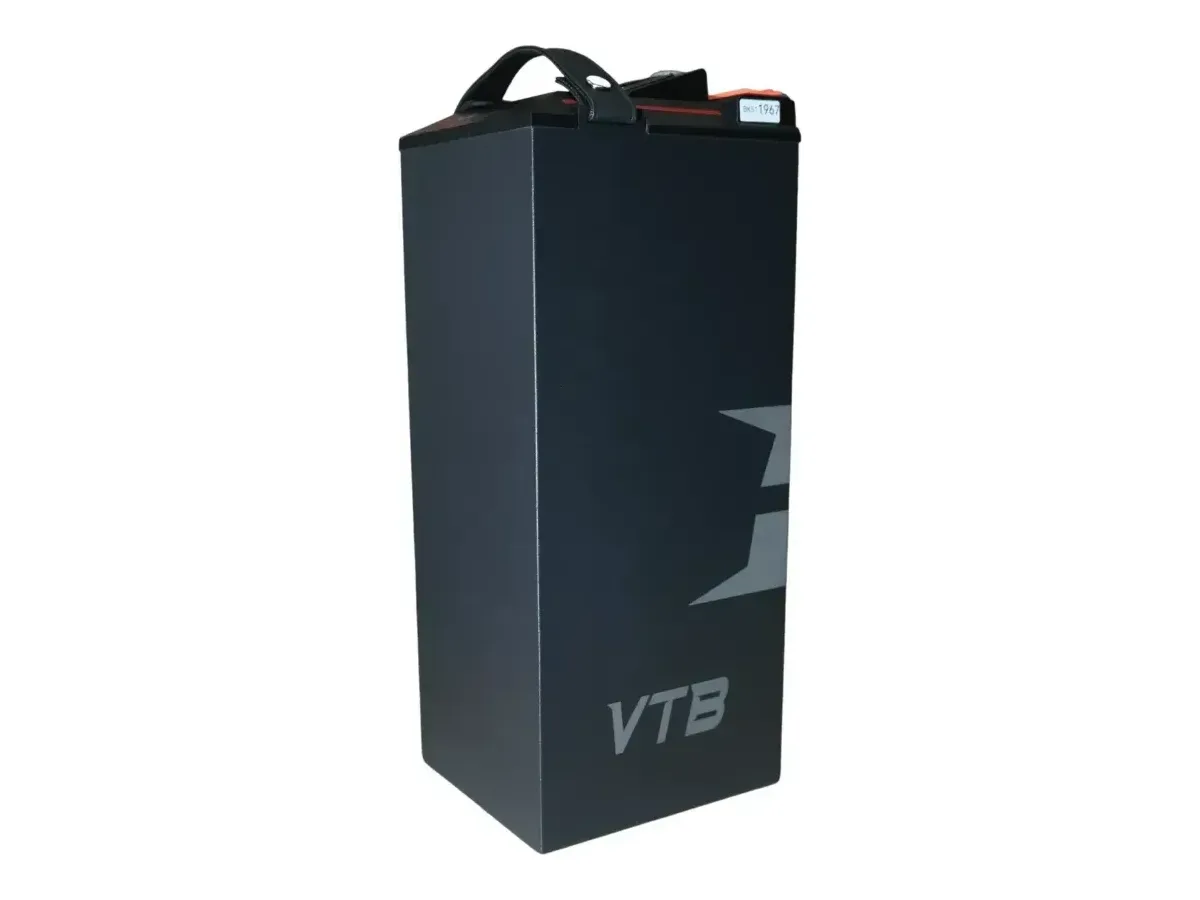
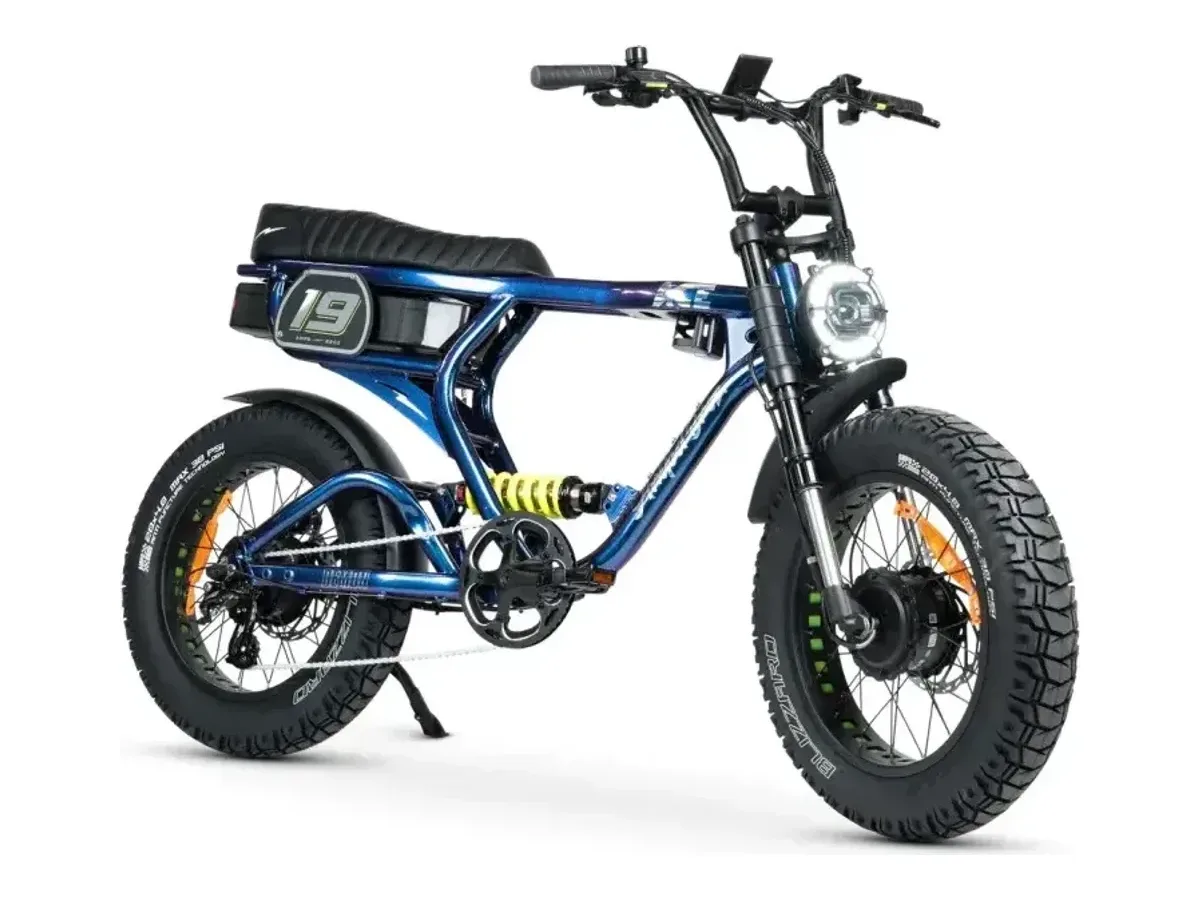
Choosing a battery for an electric bike by capacity
Shoppers often search for a "battery for a electric bike" and expect one number to answer everything, but capacity is only half the story. Match the voltage and connector first, then pick the capacity that fits your riding.
- Short commutes and park laps: around 700Wh is plenty if you recharge each day.
- Weekend bush or beach rides: 900Wh and up gives you breathing room.
- Long off-road days on an e-moto: thousands of watt hours, because motors that draw high current empty a pack quickly.
Bigger is not automatically better. A larger pack weighs more, costs more and takes longer to charge. Our 72V 50Ah touring pack stores 3,600Wh but weighs 16.5 kg, which is a lot to lift in and out of a frame.
How far will a bicycle battery take you?
Range claims are always best-case numbers. We can still use them to see what each manufacturer is assuming. The Stubbie S3 lists up to 60km from 720Wh, which is 12Wh per kilometre. The ACE Adventure lists up to 80km from 960Wh, also 12Wh per kilometre. That is a gentle pace with pedal assist, and your result will be lower on soft sand, steep hills or at full throttle.
The 72V 50Ah touring pack lists 130+ km on medium assist from 3,600Wh, which works out near 28Wh per kilometre. Off-road e-motos simply use more energy per kilometre than a pedal-assist bike.
Range factors you can control
- Rider and load: every extra kilogram costs energy, especially uphill.
- Tyre pressure and surface: soft sand and low pressure drag. The Wikipedia page on the bicycle tyre explains how pressure changes rolling resistance.
- Assist level: drop one level and you often gain a surprising amount of distance.
- Speed: wind resistance climbs quickly as you go faster.
- Temperature: cold cells deliver less, so expect a shorter first ride on a frosty morning.
Inside the pack: cells, BMS and chemistry
A pack is a bundle of cylindrical lithium-ion cells wired in series for voltage and in parallel for amp hours, wrapped in a casing with a circuit board on top. Whatever the badge, a battery electric bicycle runs on the same lithium-ion cell technology as phones and laptops, and the Wikipedia overview of the lithium-ion battery covers the basics of how those cells store energy.
Cell types in pedal e-bikes and e-motos
Common formats are 18650 and 21700. Within each, makers choose between high-energy cells, which store more charge, and high-drain cells, which deliver more current without overheating. Our 72V 50Ah touring pack uses Samsung 50S 21700 high-energy cells for distance. The 72V 42Ah upgrade uses Molicel 21700 high-drain cells, chosen for punch. We compare the two families in our Molicel P45B vs Samsung 50S cell guide.
Why the BMS matters
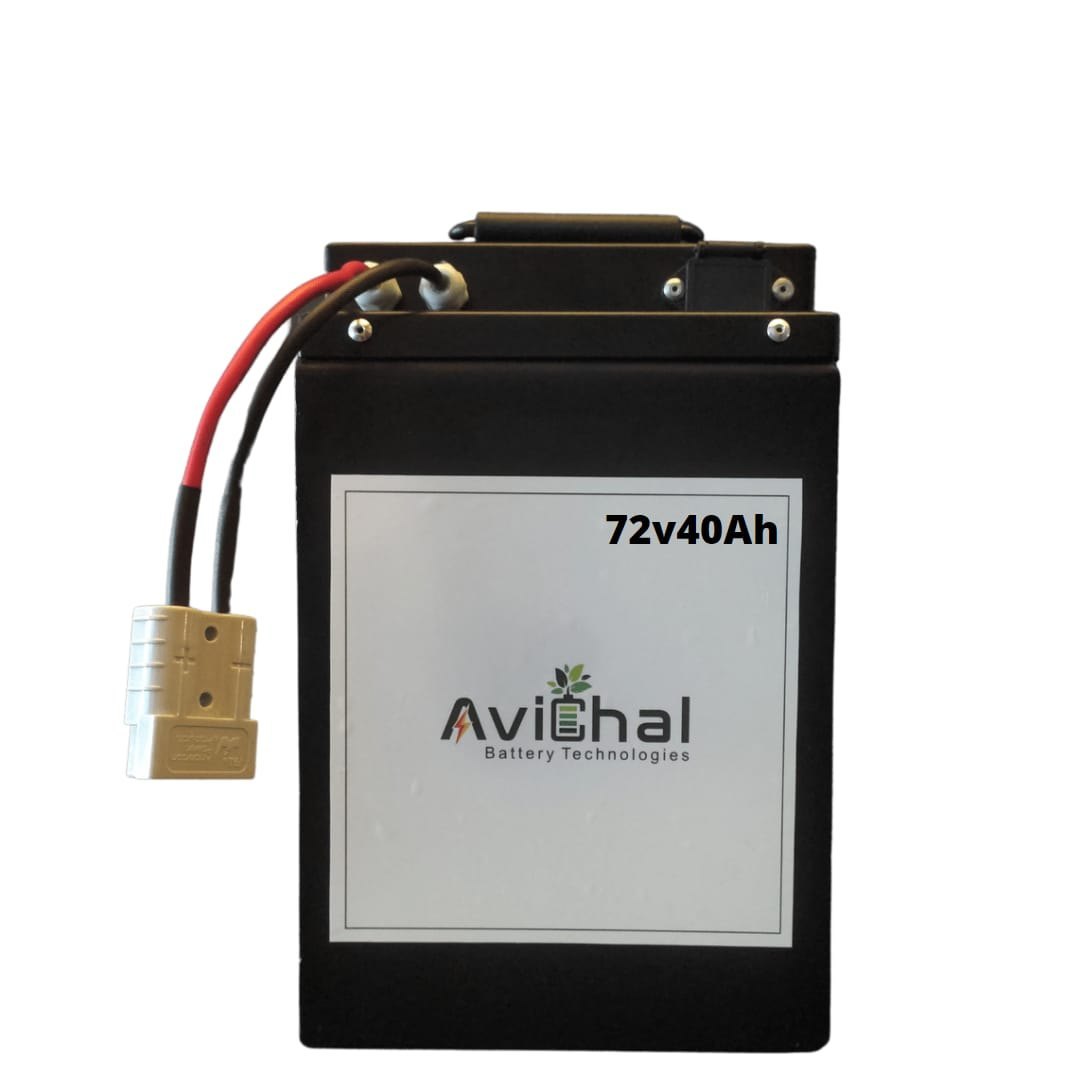
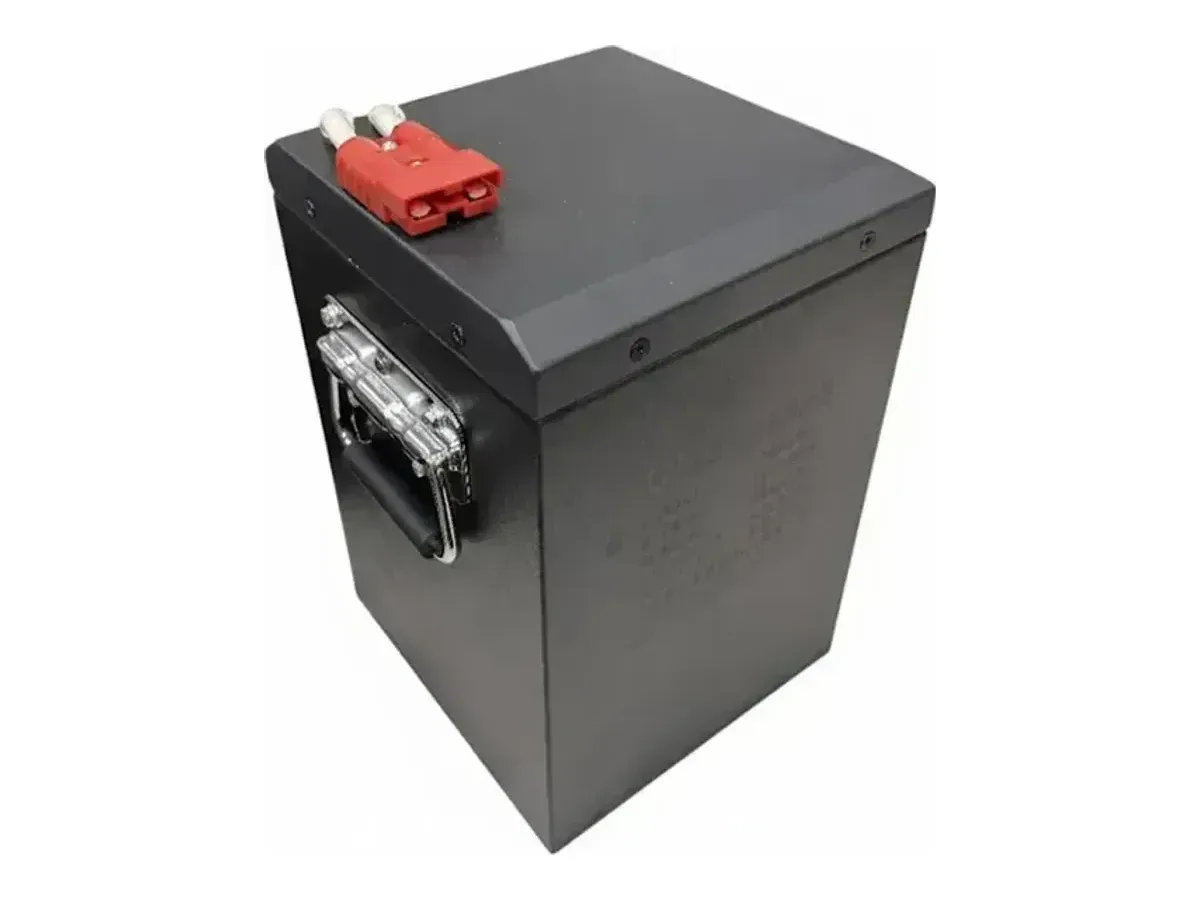
The battery management system (BMS) watches cell voltage, current and temperature. It stops over-charging, deep discharge and overload, and good ones balance the cells so none drifts out of step. The 72V 42Ah pack uses a smart Bluetooth BMS with temperature cutoffs, a feature worth looking for on any large pack.
72V 42Ah High-Discharge Lithium Battery Pack
Custom Australian-built 72V 42Ah battery upgrade for Sur-Ron Light Bee X and Talaria. Massive 3,024Wh capacity.
Pedal e-bike packs versus e-moto traction packs
An honest note on what we sell. EDBA stocks traction packs and chargers for e-motos in 60V, 72V and 84V families. We do not sell loose pedal e-bike batteries. If you own a pedal-assist bike and need an e cycle battery, start with the brand that made the bike, and read the supplier terms on warranty. Ampd Bros, for example, backs its adult e-bikes with a two-year nationwide warranty that covers manufacturer faults but excludes wear items.
If you are unsure what a particular bike takes, contact us with the make and model and we will point you in the right direction. For e-motos, browse our electric bike batteries range or the wider accessories section.
Care and storage that adds years
Lithium cells age with heat, time and extremes of charge. Battery University explains in its guide to prolonging lithium-based batteries that avoiding deep discharge, constant full charge and heat reduces wear. Turning that into habits:
- Charge on a hard, clear surface with the supplied e-bike battery charger, never a mismatched one.
- Check the e-bike battery case and connector after every ride for heat, cracks or loose pins.
- Do not leave the pack in a hot car or in direct summer sun.
- If you will not ride for weeks, store it partly charged in a cool, dry place.
- Top up when convenient rather than running it flat every time.
- Inspect the case, connector and cables for damage.
Safety around charging matters just as much as battery life. The NSW Government's page on lithium-ion batteries and e-micromobility devices covers charging and storage, so read it before you set up a charging spot. Our own charging and maintenance guide goes deeper for 60V and 72V packs, and the battery lifespan and cost guide shows what to expect over the years.
E-bike battery replacement and upgrades
An electric battery for bicycle riding rarely fails overnight. Most packs lose capacity gradually, so the sign is shorter rides, not a sudden failure. If your range has dropped a lot, the bike cuts out under load, or the case swells or gets unusually hot, stop using it and get it checked. If you are weighing up electric bicycle battery replacement options, remember that price depends on voltage, capacity and cell quality, so a like-for-like pack is the safest starting point. The full process is in our replacement cost guide, and how to match the right charger is in the charger guide.
Upgrading is different from replacing. A higher voltage or capacity changes how the bike behaves and can need a matching controller, which is covered in our 72V battery upgrade guide. For a bike that is already on 60V, a pack like the 60V 53Ah is made to work with the stock controller.
Fat tyre pedal-assist bikes suit gentle trails and beach tracks, and you can see them in our electric fat tyre bikes range. For high-power off-road riding, browse electric dirt bikes.
Buying: e-bikes for sale and pack prices
If you are shopping for electric bikes for sale, the Stubbie S3 is $2,590 with a 720Wh pack and the ACE Adventure is $3,290 with 960Wh. For a Sur-Ron or Talaria owner, the 72V 42Ah lithium battery upgrade is $2,190. Compare the electric bicycle price against watt hours, not just the sticker, because a bigger pack is the part you pay for. Orders over $1,500 ship free, and crypto (BTC or USDT) or PayID payments get 10% off instantly. See the full fat tyre bike range or contact us before you order.
Frequently Asked Questions
What is a motor bicycle battery, and is it the same as an e-bike pack?
People use that phrase for a lot of things, including the 12V starter battery in a petrol motorcycle. That is a different product from the high-voltage lithium pack that drives an electric bike. We cover the difference in our lithium vs lead-acid guide. EDBA does not stock 12V starter batteries, only traction packs for e-motos.
Which charger for e-bike packs is safe to use?
Match voltage first, then the connector, then choose the current. A charger sized for a 48V pedal bike will not safely charge a 72V pack. Use the charger supplied with your bike, or ask the maker for the exact replacement model. If you ride a Sur-Ron or Talaria, our charger guide lists the stocked options and what each one suits.
What electric bike price should I expect for an e bike Australia buyers can trust?
In our range, adult e-bikes start at $2,190 for the RIPTIDE 3, with the Stubbie S3 at $2,590 and the ACE Adventure at $3,290. Battery energy, brakes and warranty explain the gap, so compare 720Wh with 960Wh and not just the price. Ampd Bros road-compliant models are 250W with assist limited to 25 km/h, while off-road versions are for private property only, and state rules vary, so see our e-bike laws page before riding in public.
What affects e-bike electric range apart from battery size?
Weight, tyres, terrain, assist level, speed and temperature all play a part. Use watt hours divided by your own consumption in Wh per kilometre. Log a few rides, work out your average, and you will have a far better estimate than any brochure figure.
Where can I find the best e-bikes Australia has for sale, and what do they cost?
Browse our electric bikes page, where each model lists its price, battery size and warranty. Longer battery life comes from watt hours, cell brand, BMS features and sensible charging, not the headline range. Freight is free on orders over $1,500. For e-motos, our adult electric dirt bike guide compares models by use and budget.