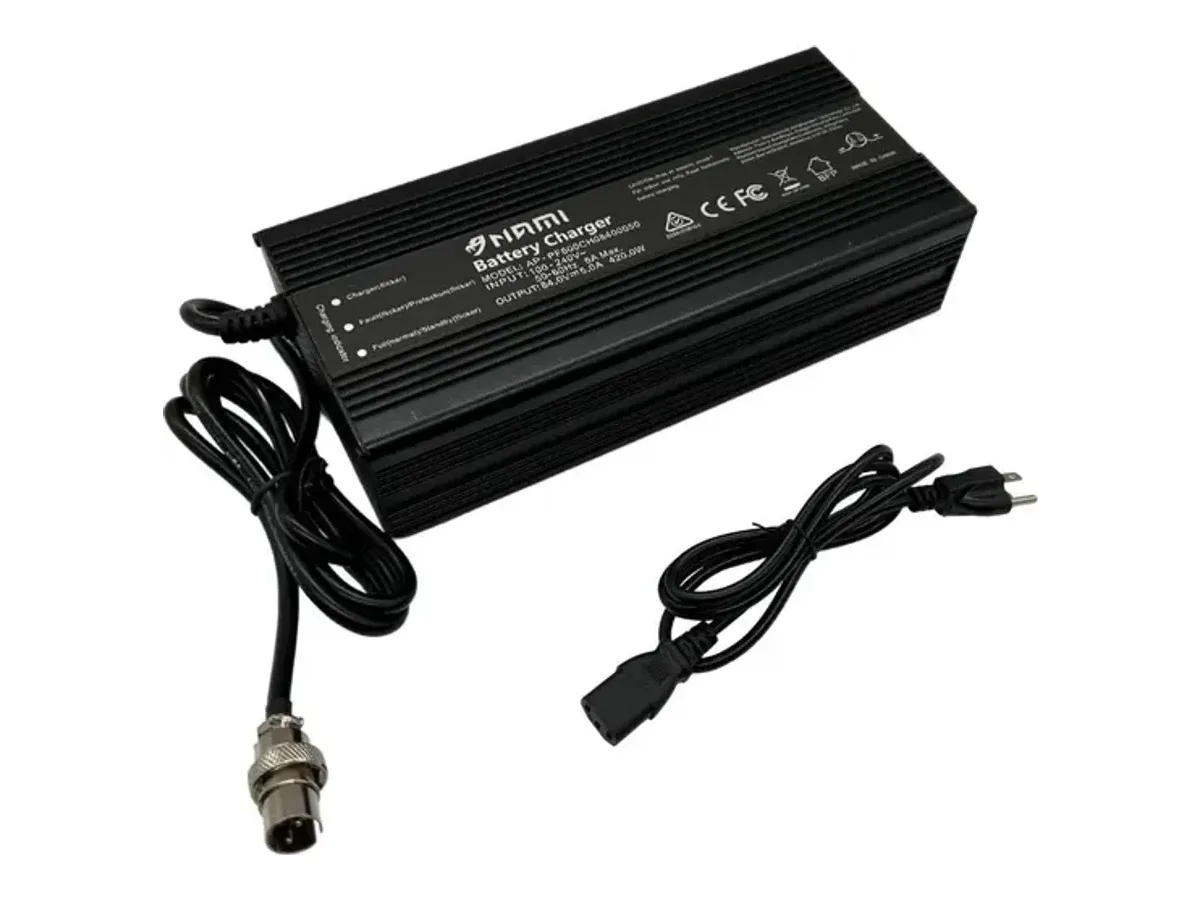
A charger is not a generic accessory. The right e-bike battery charger has to match your pack's voltage, fit its connector and deliver a current your battery can handle. Get those three things right and charging is boring, which is exactly what you want. Get one wrong and you risk a damaged pack or worse.
This guide explains volts and amps in plain language, shows how to estimate charge time with real packs, compares the three chargers we stock and covers where and when to charge. One honest limit first: our chargers are for 60V, 72V and 84V e-moto packs. If you ride a lower-voltage pedal-assist bike, you need the charger made for that bike.
How an e-bike battery charger actually works
Lithium packs are charged in two stages. The charger pushes a steady current until the pack reaches its full voltage, then holds that voltage while the current tapers down to nearly nothing. The last stretch is always slower than the first, which is why the last stretch of a charge seems to drag.
Voltage: the number that must match
The charger's output voltage has to suit the number of cells in the pack. A nominal 60V pack is fully charged at 67.2V, and a nominal 72V pack at 84V. Our 72V 42Ah upgrade, for instance, is listed as 72V nominal and 84V at full charge. A charger set for the wrong voltage will either undercharge the pack or push it past its safe limit. Battery University's article on types of lithium-ion batteries shows how different chemistries have different full-charge voltages, which is why chemistry matters too.
Amps: the number that sets the speed
Amps describe how fast energy flows in. A 15A charger moves roughly half as much current again as a 10A one, so the same pack fills faster. Faster is not always better. Higher current produces more heat in the charger and the pack, and a hot battery ages sooner. If you are not in a hurry, a lower setting is gentler on the cells.
How long will it take? A worked example
You can estimate charge time with a simple sum:
Charge time (hours) = battery watt hours / (charger volts x charger amps)
Take the 60V 53Ah high-capacity pack, listed at 3,180Wh and 67.2V at full charge. With a 15A charger, the power going in is 67.2 x 15 = 1,008W. So 3,180 / 1,008 is about 3.2 hours. That is a best-case figure, because the current tapers near the end, so plan on a little longer.
Now the same pack with other chargers, using the same formula.
| Charger current | Power at 67.2V | Ideal time for a 3,180Wh pack |
|---|---|---|
| 10A | 672W | About 4.7 hours |
| 15A | 1,008W | About 3.2 hours |
| 20A | 1,344W | About 2.4 hours |
These assume a charger that is correctly matched to the pack. Real-world times will be somewhat longer, and a half-empty pack needs less than a flat one, so the formula is a planning guide, not a promise.
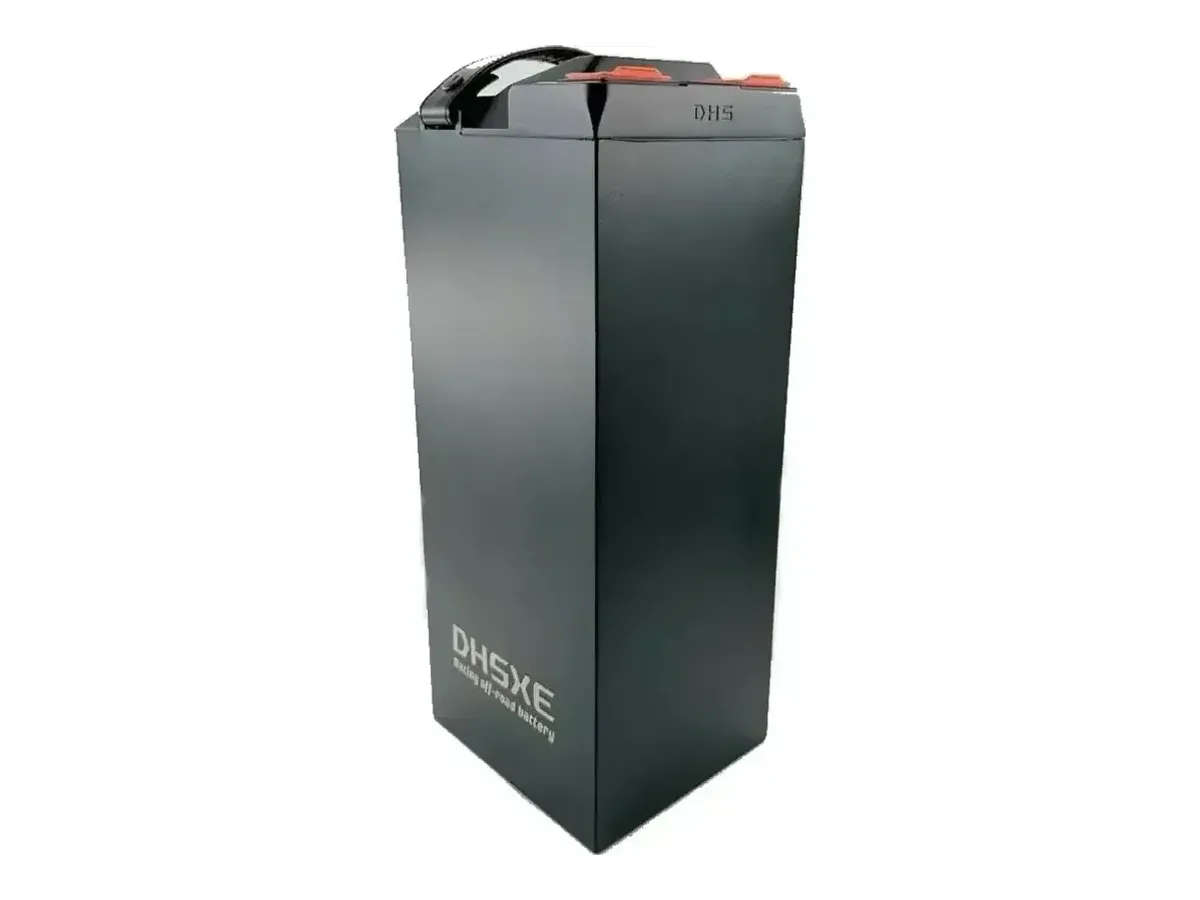
Choosing a charger for e-bike packs: the three we stock
Here is how our chargers line up. All are for e-moto packs, and prices are current listings.
| Charger | Output | Price | Notable features |
|---|---|---|---|
| 10A Compact Touring Fast Charger | 10A | $240 | 1.2 kg, 210 x 95 x 55mm, anodised aluminium |
| 15A Smart Fast Charger | 5A, 10A or 15A adjustable | $380 | Dual 60V/72V auto-detect, digital readout, thermal shutdown |
| 20A Ultra Fast Pit Charger | Up to 20A, variable | $490 | OLED display, dual cooling fans, thermal throttle |
15A smart charger: the all-rounder
The 15A Smart Fast Charger auto-detects 60V and 72V packs, lets you pick 5A, 10A or 15A, and protects against over-voltage, reverse polarity and overheating. It uses heavy-gauge leads with an Anderson or Sur-Ron plug and an Australian mains plug. For most riders with one bike, this is the sensible default.
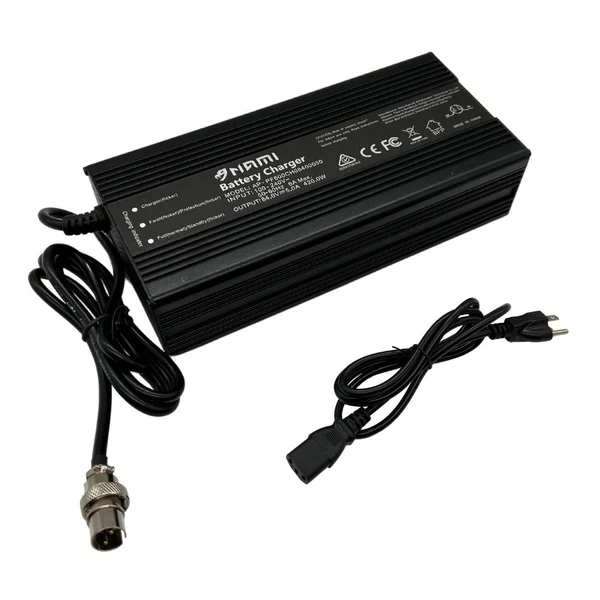
15A Smart Fast Charger (Dual 60V / 72V Auto-Detect)
Rapid 15A alloy smart charger with digital voltage & amperage readout, silent ball-bearing fan, and Australian standard plug.
20A pit charger: for race days and sharing a charger
The 20A Ultra Fast Pit Charger suits riders who want quick turnarounds. The listing says it recharges a 40Ah pack in under 75 minutes between moto heats. Check that against the formula: 20A for 75 minutes delivers 25Ah, so read that as a quick top-up between heats rather than empty to full. Our guide to fast chargers and solar generators covers using chargers away from the garage.
20A Ultra Fast Pit Charger with Variable Amperage
Heavy-duty 20 Amp track charger. Recharges a 40Ah pack in under 75 minutes between moto heats.
Reading the display
Both the 15A and 20A units show live numbers. The 15A has a digital voltage and amperage readout and the 20A has a colour OLED display for voltage, current and wattage. Those readouts are useful: if the voltage never climbs, or the current reads zero with the pack connected, you know to stop and investigate rather than guessing.
10A touring charger: for the backpack
The 10A Compact Touring Fast Charger weighs 1.2 kg and fits in a pack, so it is handy for long trail rides with a café stop or country pub on the route. A lower charging current is generally gentler on the cells than the bigger units deliver.
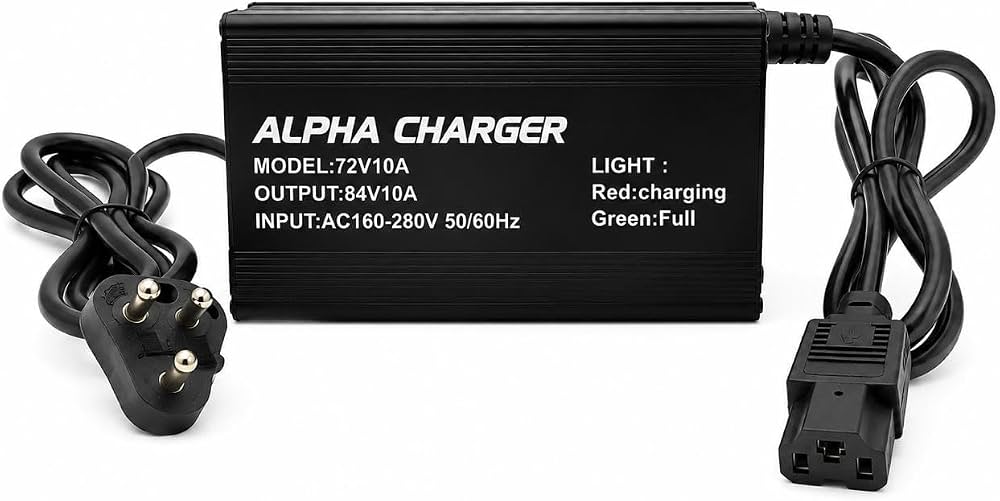
10A Compact Touring Fast Charger with AU Plug
Lightweight, backpack-friendly 10A aluminium fast charger for long trail rides and country pub stops.
The 20A and 10A listings do not state a pack voltage, so contact us with your bike's make and pack voltage before ordering and we will confirm the match.
Never use a mismatched charger
A charger that "nearly fits" is the most common route to trouble. Before every purchase or borrowed charger:
- Confirm the voltage matches the pack's nominal and full-charge voltage.
- Confirm the connector is the exact type, not an adapter you had to force.
- Check the leads for cuts, burn marks or exposed wire.
- Use a charger designed for lithium-ion cells, never a lead-acid one.
- Replace any charger that gets very hot, smells or makes unusual noises, and do not repair leads yourself with tape.
Any e-bike battery charger you buy should be a lithium-ion unit with over-voltage and temperature protection, and if the pack came with its own charger, treat that as the first choice. The ACCC product safety page on e-micromobility devices outlines national product safety work on e-micromobility devices.
Heat, ventilation and overnight charging
Chargers and packs make heat, so give them space. Charge on a hard, flat surface away from curtains, fuel, paper and anything else that burns. Keep the pack out of the sun and out of a hot shed. Unplug when the charge is finished.
Fire agencies generally advise against leaving lithium batteries charging unattended or while you sleep, and they list warning signs such as swelling, odd smells or unusual heat. Read the NSW Government guidance on lithium-ion batteries and the Queensland Fire Department advice for current recommendations. Our charging and maintenance guide adds routines for 60V and 72V packs.
Pedal-assist e bike chargers and why ours do not fit
Fat tyre pedal-assist bikes, like those in our electric fat tyre bikes range, ship with a charger sized for their lower-voltage pack. For a pedal bike, ask the maker for the exact part, because we do not list a charger for that type of battery electric bicycle. Do not borrow an e-moto unit. Our e-bike battery guide explains how to read the label on any pack so you know what you are shopping for.
Charger fault or e cycle battery fault?
A failing charger can look like a failing pack. If the charger's lights never reach "full", the fan is silent when it should be running, or the voltage reading is wrong, test with a known good charger before you blame the cells. If the pack drops quickly after a full charge, it may be worn. In that case the next step is our replacement guide, where electric bicycle battery replacement options and the cost of e-moto packs are laid out. Browse the full electric bike batteries range or the accessories section when you are ready to buy.
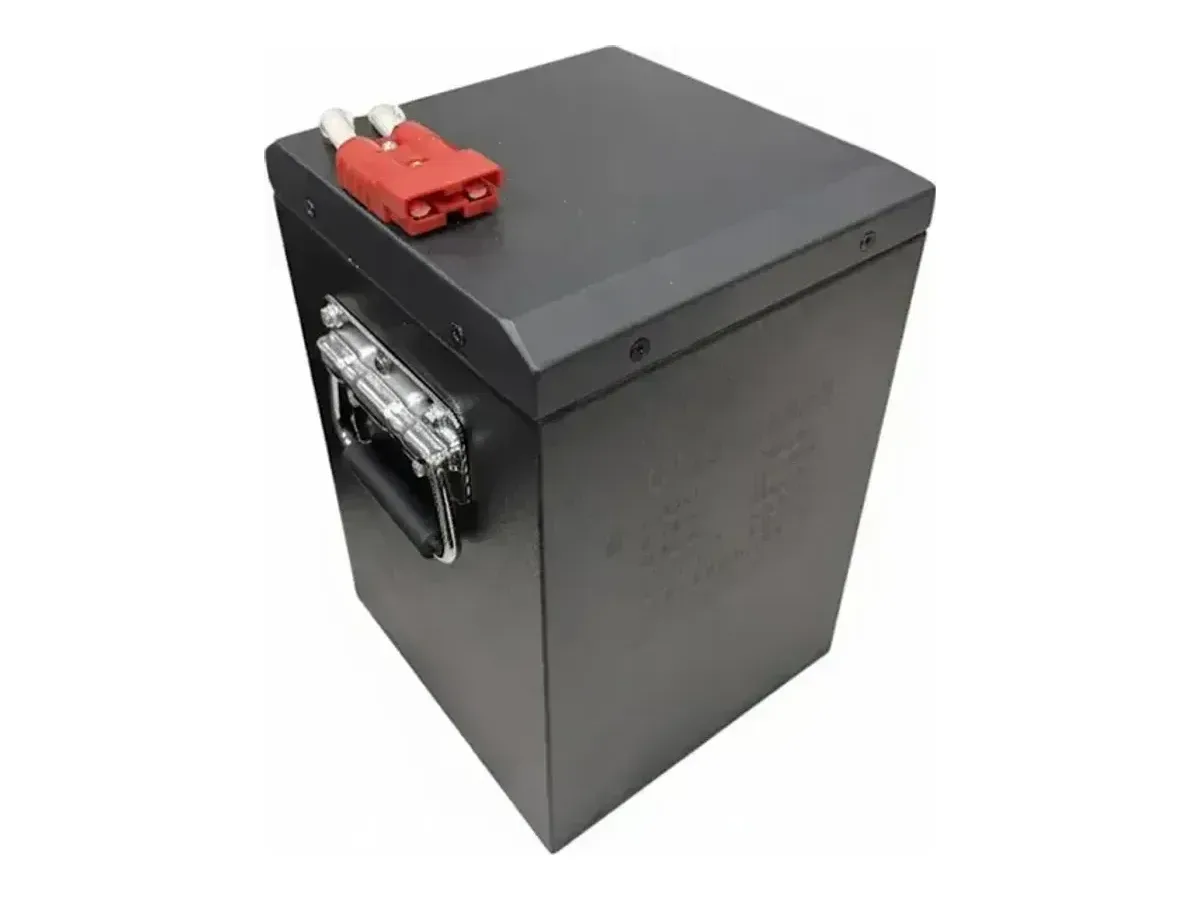
Chargers and e-bikes for sale: what you pay
The chargers for sale here are the 10A Compact Touring Charger at $240, the 15A Smart Fast Charger at $380 and the 20A Ultra Fast Pit Charger at $490. Pair a charger with the right pack from our electric bike batteries range, and note that an order over $1,500 ships free while crypto (BTC or USDT) or PayID payments get 10% off instantly. If you are also looking at electric bikes for sale, compare the electric bike price and electric bicycle price of each model on the electric bikes page. Ready to buy? Check your voltage, then add the matching charger to your cart.
Frequently Asked Questions
Does a motor bicycle battery use the same charger as an electric bike?
No. The battery in a petrol bike is a 12V lead-acid or lithium starter battery and needs a different charger from the high-voltage packs on electric motorbikes. Always match voltage and chemistry. We stock chargers for 60V, 72V and 84V e-moto traction packs only.
Which battery for a electric bike works with the 15A charger, and what does it cost?
Our 15A charger is made for 60V and 72V packs, such as the Sur-Ron OEM 60V 40Ah, the 60V 53Ah pack or the 72V 42Ah upgrade. Pedal-assist packs sit at lower voltages and need their own charger, so check the label before you order anything. The charger is $380. When in doubt, send us a photo of the pack label and the plug.
Is a battery for an electric bike charged faster with a bigger charger?
Yes, up to the limit of what the battery's BMS and cells accept. A 20A charger can fill a pack sooner than a 10A one, but it also makes more heat. For everyday use, a moderate current is kinder to the cells. Use the high-current setting when time matters, not by default.
How much do an electric battery for bicycle use and the right charger cost together?
Chargers here run from $240 to $490, with packs listed on the batteries page. Choose the pack first, then the charger. Write down the pack's nominal voltage, full-charge voltage and connector type, then check the charger lists the same. A balanced pair is safer than a mismatched bargain, and it avoids paying twice. If you are buying a pack and charger together, mention both in your enquiry so we can check the whole set-up.
Can the same charger look after any bicycle battery?
Not safely. A pedal-assist pack at 48V needs a charger designed for that voltage and cell count, and our 60V and 72V models are not intended for it. Use the supplied charger or ask the maker which replacement matches, and never try to adapt plugs to make a unit fit. A wrong match can damage the pack and may be a fire risk.