Fat tyre bikes Australia wide are built for the surfaces that stop a normal bike: soft sand, loose gravel, sandy fire trails and the gritty edge of a coastal path. But the bike is only half of a good day out. The other half is knowing the rules, setting the tyres sensibly, protecting the drivetrain from salt, and planning your battery for ground that eats range. Whether you call it an electric fat bike or, in the American spelling, fat tire electric bicycles, the same ride-day logic applies. This guide runs from the night before to the rinse afterwards, with three models from Ampd Bros that suit soft terrain.
Fat bike Australia rules: check where you can actually ride
Do this first, because it decides everything else. Rules for e-bikes on beaches, dunes, national parks and state forests differ by state, by council and by land manager, and a wide-tyre bike is not automatically welcome anywhere. Plenty of beaches restrict wheeled vehicles at certain times or in certain zones. Overseas visitors searching for a bicyclette fat bike will find the same Australian rules apply to them.
Start with the state and the council
Read your state's e-bike page first: NSW, Queensland and Western Australia all publish rules. Then check the local council page for the beach or reserve, and the park authority for trails. Our e-bike laws overview is a good primer, but it is not legal advice.
Road-compliant versus off-road bikes
Most Ampd Bros bikes are sold either as a 250W road-compliant model (pedal assist limited to 25 km/h, throttle limited to a 6 km/h walk assist) or as an off-road model for private property only. You choose at purchase and cannot change it later. The ACE-X Demon is off-road only. An off-road-only bike belongs on private land with the owner's permission, so do not assume a public beach counts.
Why an electric fat bike copes with soft ground
Soft ground is hard work because the tyre sinks and you lose speed with every metre. Two things fight that. The first is volume: a wide tyre sits higher on loose material. The second is assistance. The motor smooths out the moments where you would otherwise stall, and the torque on these bikes (65 to 95 N.m, depending on the model) helps you pull away if you do bog down. A plain fat tyre bicycle with no motor can do the same job, but you supply every watt yourself, which is why the battery is the part to plan around.
Setting tyre pressure for sand
The principle
Sand rewards a larger contact patch. Letting some air out lets the tyre spread and float rather than dig, while higher pressure suits hard surfaces and protects the rim from sharp hits. That is the principle behind most wide-tyre advice, and the Wikipedia article on bicycle tyres outlines how pressure and width interact.
Follow the manufacturer
The supplier specifications for these bikes do not give a pressure figure, so we will not invent one. Check the sidewall of your tyre for its recommended range, read your owner's manual, and use a small pressure gauge rather than guessing by thumb. Change pressure in small steps and ride a short test loop. If the tyre feels vague or the rim is touching down, add some back.
Technique: how fat tyre bikes Australia riders keep moving on sand
Wide tyres help, but sand still punishes bad habits. These points keep you moving:
- Carry momentum into soft patches rather than stopping in them.
- Stay seated and pedal steadily instead of stamping on the pedals.
- Pick the firmer line, which is often damp sand near the waterline, and check tide times first.
- Brake gently and early, because locking a wheel digs a trench.
- Look ahead, not at the front tyre.
Keep your assist level moderate, too. Heavy assist on loose sand spins the wheel and burns battery.
Range in soft terrain: plan for less than the brochure
Every range number in the product listings says "up to". Soft sand, hills and headwinds all cut it. As a worked illustration only: if a pack rated for up to 80 km delivered half that on soft ground, you would plan for 40 km and keep a reserve. Do the sums in watt-hours (Wh = V x Ah). The Chubbie-S 3 carries 48V x 20Ah = 960Wh, the Stubbie-S S3 carries 48V x 15Ah = 720Wh, and the ACE-X Demon carries 52V x 25Ah = 1,300Wh. A bigger pack buys you a bigger safety margin when the going is slow.
For a broader view of how off-road electric bikes cope with range, bush and legal limits, read our off-road electric bike guide.
Aftercare for a fat tyre electric bike after salt and sand
Salt air and fine sand are hard on chains, cables, bearings and brake pads. A simple routine helps:
- Wipe down the frame and rinse off salt with a gentle flow of fresh water, avoiding a pressure washer aimed at the motor, battery or display.
- Dry the bike, then lightly lubricate the chain and check that the gears still shift.
- Inspect brake pads. Sand wears them quickly, and pads are a wear item that the Ampd Bros warranty excludes.
- Check tyre pressure and look for cuts or embedded shells.
- Store the bike indoors if you can.
Charging and the battery
Follow the charger instructions that came with your bike, and charge somewhere sensible, not on a bed or near flammables. Battery University explains how to prolong lithium batteries, and Queensland Fire's lithium-ion battery safety page covers storage and charging habits.
A five-minute pre-ride check
Before you leave the car park, run through this short list. It catches most of the problems that end a ride early.
- Squeeze both brake levers and spin each wheel to confirm nothing rubs.
- Check tyre pressure against your manual and the sidewall range.
- Confirm the battery is seated, locked and charged for the loop plus a reserve.
- Look over the chain and gears for grit left from the last ride.
- Tell someone where you are going and when you expect to return.
Three Ampd Bros bikes for sand and trails
| Model | Price | Frame | Wheels | Battery | Range (up to) | Torque | Max load |
|---|---|---|---|---|---|---|---|
| Stubbie-S S3 | $2,590 | Step Through | 20" | 48V 15Ah (720Wh) | 60 km | 65 N.m | 120 kg |
| Chubbie-S 3 | $3,490 | Step Through | 26" | 48V 20Ah (960Wh) | 80 km | 80 N.m | 120 kg |
| ACE-X Demon S5 | $4,990 | Step Over | 20" | 52V 25Ah (1,300Wh) | 100 km | 95 N.m | 180 kg |
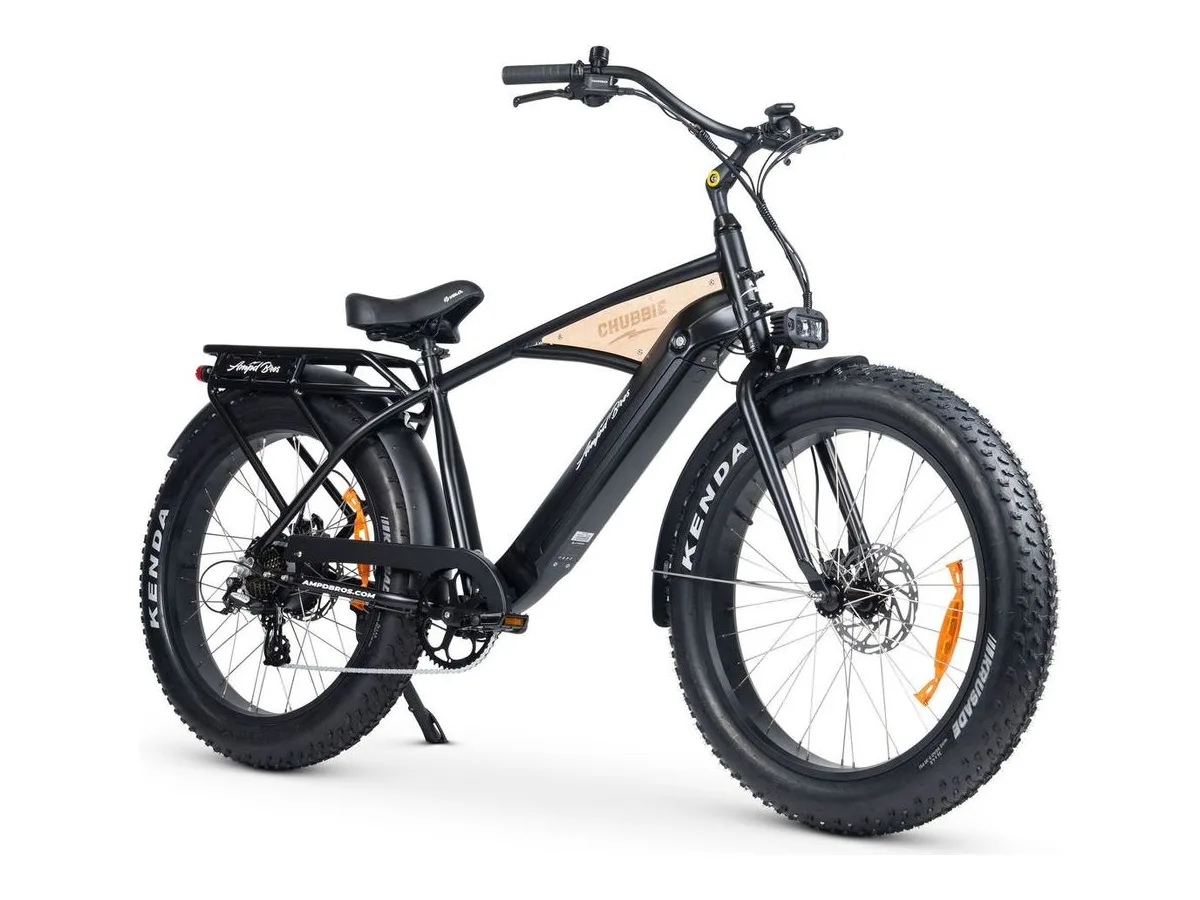
Chubbie-S 3 for relaxed coastal riding
The Chubbie-S 3 is a beach cruiser style with 26-inch wheels, a step-through frame and a 960Wh pack. It suits firm sand, boardwalks and coastal paths. Seat height runs from 890 to 1,000mm.
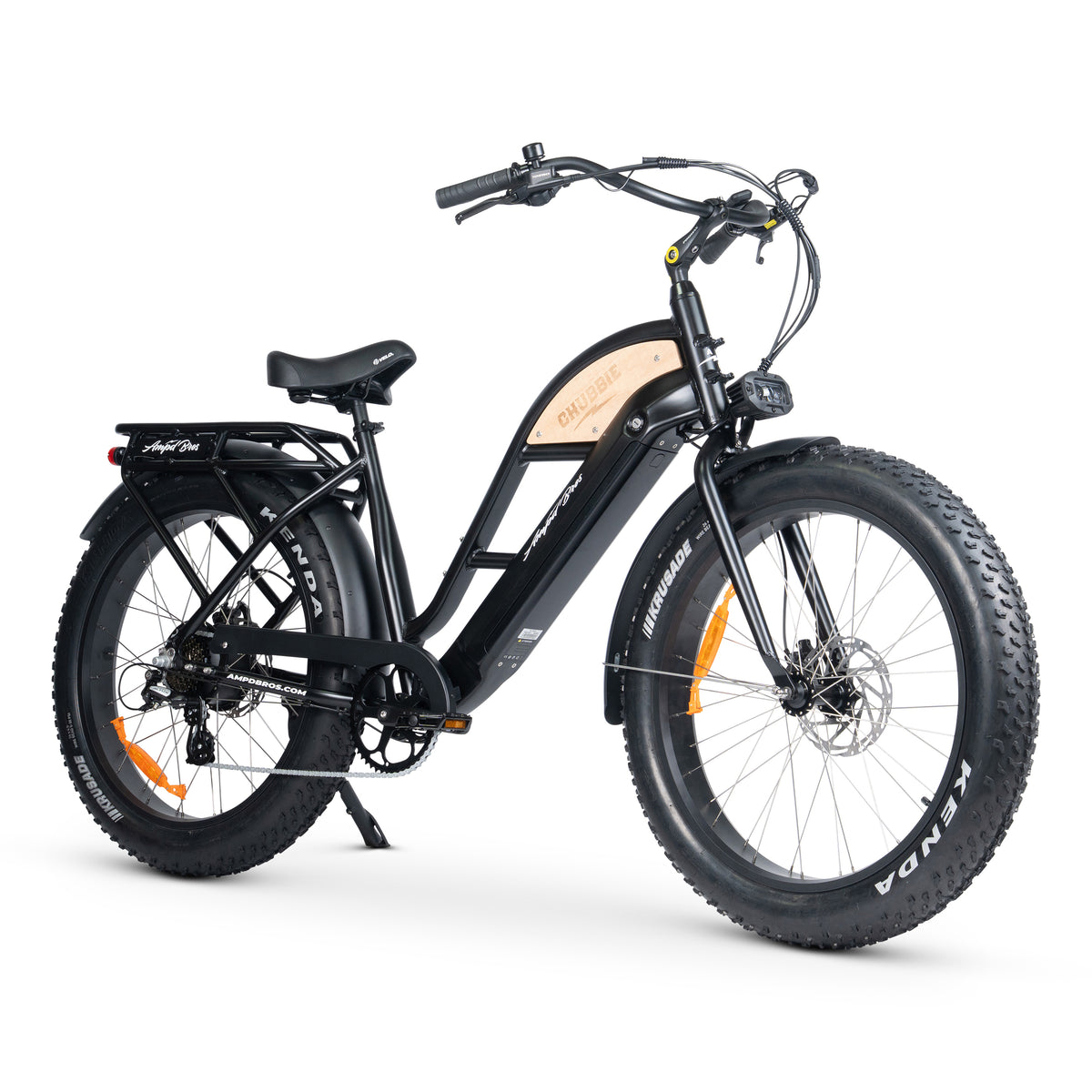
CHUBBIE-S 3 Electric Bike (48V 20Ah / 250W)
Ampd Bros electric beach cruiser with 250W continuous, 48V 20Ah, range up to 80km.
Stubbie-S S3 for lighter, shorter days
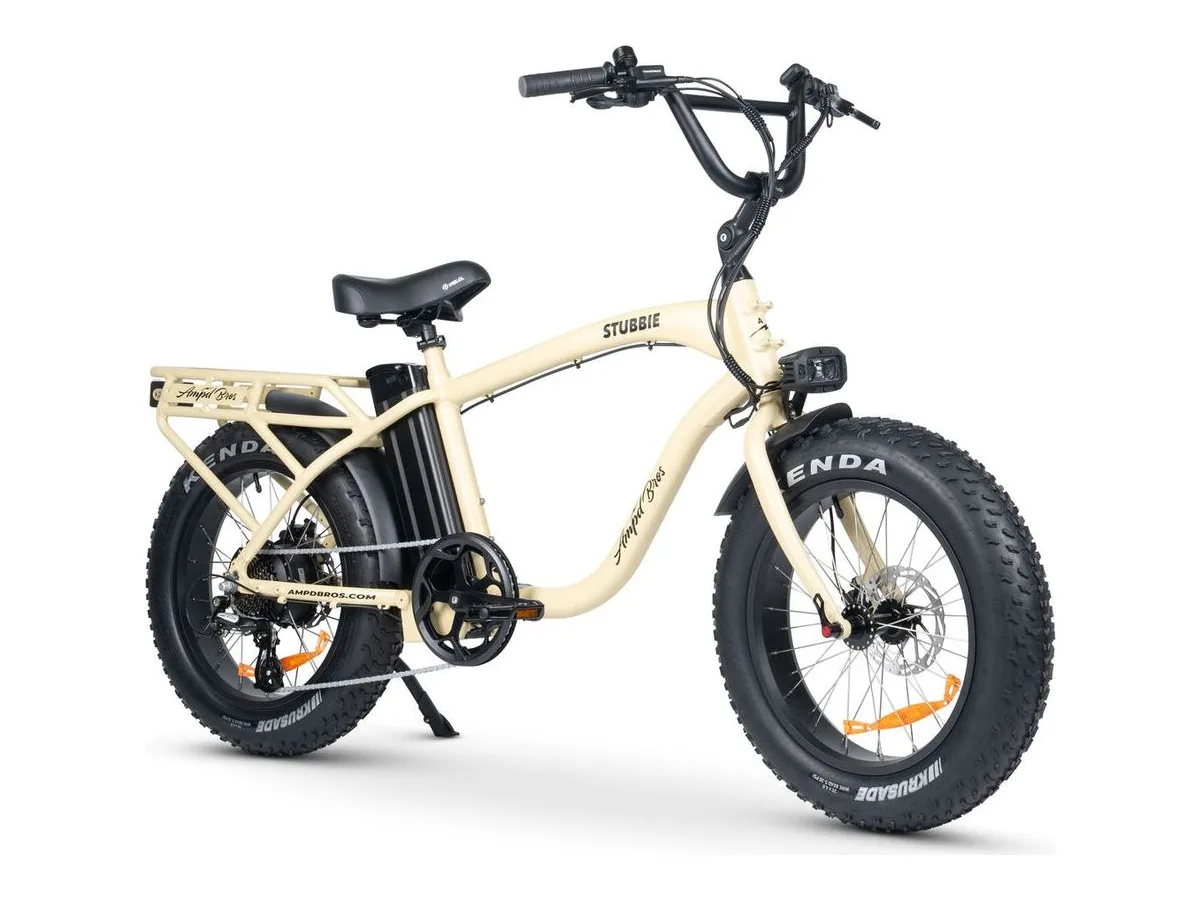
At $2,590 the Stubbie-S S3 is the entry point, with a step-through frame and seat heights from 780 to 920mm. The 60 km claim is the shortest here, so keep soft-sand loops short.
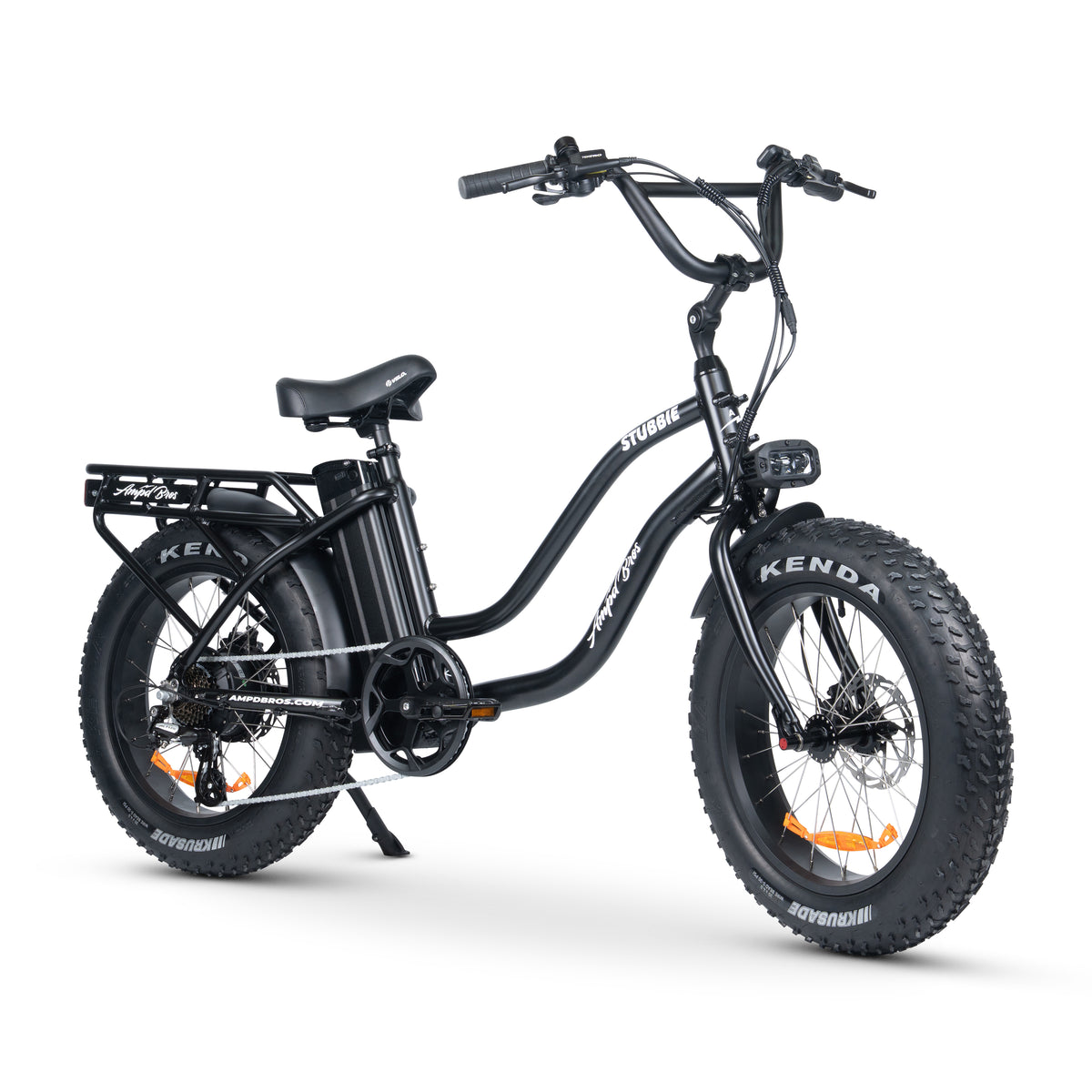
Stubbie-S S3 Electric Bike (48V 15Ah / 250W)
Ampd Bros fat tyre electric bike with 250W continuous, 48V 15Ah, range up to 60km.
ACE-X Demon for private-land power
The ACE-X Demon is a 1,000W dual-suspension machine for private property only. If you own or have permission to ride a sandy block or bush track, the bigger battery and suspension earn their price.
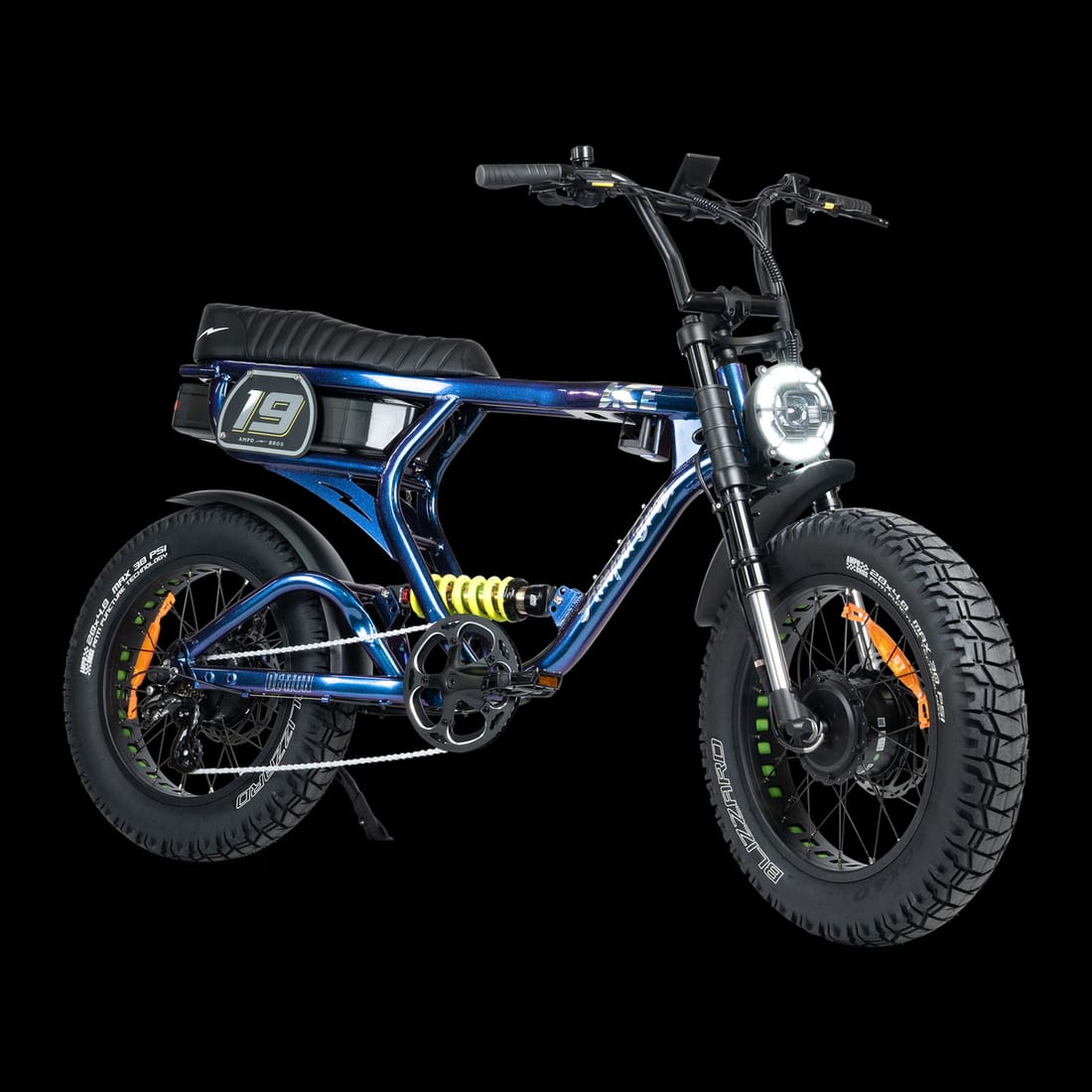
ACE-X Demon S5 Dual Electric Bike (52V 25Ah / 1,000W)
Ampd Bros fat tyre electric bike with 1,000W (off-road only), 52V 25Ah, range up to 100km.
If you are comparing more models, our wide-tyre e-bike range lists every one, and the buying checklist puts the specs side by side. Weighing a wide-tyre bike against a commuter? See the comparison of wide-tyre and standard e-bikes.
Safety gear and trail manners
- A properly fitted helmet, every ride.
- Gloves and eye protection. Sand and grit are painful at speed.
- Closed shoes with grip.
- Water, a phone and a power bank, plus a note of where you are riding.
- Lights if there is any chance of riding near dusk.
Give walkers right of way, slow right down near people and dogs, and stay on formed tracks to protect dunes and vegetation. For the basics on helmets, lights and road rules, read our e-bike safety guide.
Where to go next
Choose by terrain: cruisers for firm sand and promenades, ACE-style bikes for rougher trails. If you like the cruiser look, see how the Chubbie and Riptide cruisers compare. Wikipedia's fatbike article is a good short history of the idea. When you are ready, browse the full wide-tyre range. Freight is free over $1,500, delivery is by Toll Ipec with a signature required, and adult e-bikes carry a 2-year Ampd Bros nationwide warranty.
E bikes for sale Australia: what the three bikes cost
The e bike price for the bikes in this guide starts at $2,590 for the Stubbie-S S3, rises to $3,490 for the Chubbie-S 3, and tops out at $4,990 for the ACE-X Demon S5, which is off-road only. Each one is over $1,500, so freight is free. Pay with crypto (BTC or USDT) or PayID for 10% off. Ampd Bros supplier terms apply, including the 2-year nationwide warranty and Toll Ipec delivery with a signature required.
Looking for an ebike for sale Australia wide that handles sand? Start with the wide-tyre category, and check the e-bike laws guide for where you can ride.
Frequently Asked Questions
What are fat tyre bikes actually good for?
A fat wheel bicycle, much like the fat tyre bikes Australia riders buy for the coast, is best on soft or loose surfaces: sand, gravel, snow in colder climates and rough trails. The extra tyre volume improves flotation and comfort. On smooth bitumen a slimmer tyre feels quicker, so choose wide tyres only if your riding genuinely needs them.
Is there an electric cycle price in Australia that suits a sand-riding budget?
The Stubbie-S S3 at $2,590 is the lowest-priced bike in this guide, while the Chubbie-S 3 is $3,490 and the ACE-X Demon S5 is $4,990. The Demon is for private property only. Freight is free on every one, and crypto or PayID payments take 10% off.
What is the e bike price for a beach cruiser?
Among the Ampd Bros cruisers, the Riptide 3 starts at $2,190 and the Chubbie-S 3 is $3,490. The difference is largely battery size, torque and brake size: 48V 15Ah and 60 N.m against 48V 20Ah and 80 N.m. Compare watt-hours and warranty before you decide.
How do I look after my bike if I ride near salt water?
Rinse off salt with fresh water, keep water away from the battery and display, dry the bike, and lubricate the chain. Salt and sand wear brake pads and drivetrain parts faster, and those are wear items outside the warranty, so check them regularly.
Which Australian beaches let you ride an e-bike?
It depends on the state, the council and the beach. Many councils restrict wheeled vehicles in some zones or seasons, so check the council page or call them. Off-road-only models such as the ACE-X Demon are for private property, so always confirm land access before you ride.