E-bike safety in Australia comes down to four things: the right helmet and gear, a compliant e-bike, safe battery charging and storage, and knowing your state's rules. This guide links to the official government and fire-service pages so you can read the current advice yourself.
Helmet and protective gear
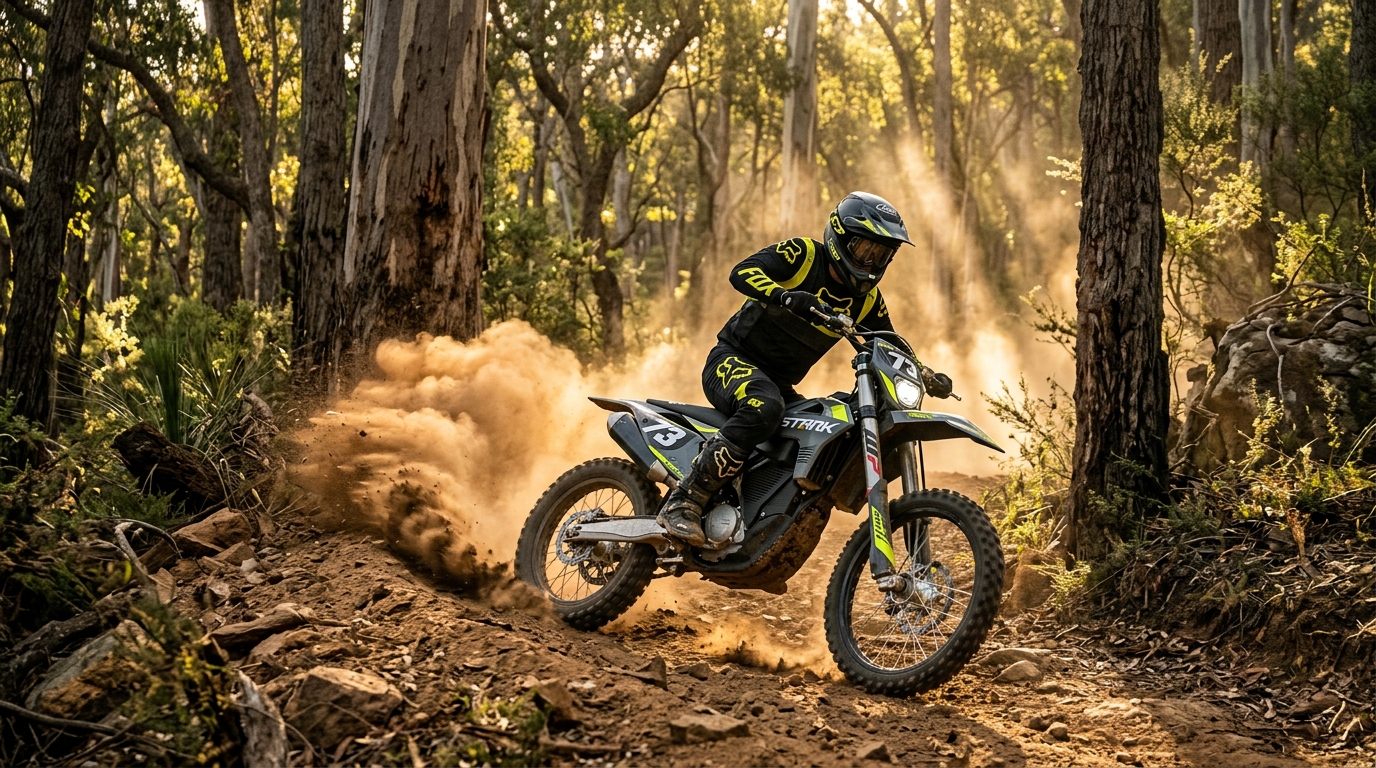
Wear a properly fastened, approved helmet every time you ride. Queensland, for example, lists a fine for an unfastened helmet and approves both bicycle and motorbike helmets. For off-road electric dirt bikes, wear a full-face helmet, gloves, boots and body protection. Our footer notice says the same: always wear Australian standard certified helmets and full safety gear.
Buy an e-bike that is compliant
In Queensland a legal e-bike is 250W with assistance up to 25 km/h and an EN 15194 label, and NSW has announced a move to a 250W cap and EN 15194 certification. Check each state's current rules before you buy. Our guides to electric bike laws in QLD and electric bike regulations in NSW summarise them.
Charging and storing lithium batteries
Australian regulators and fire services warn that lithium-ion batteries can catch fire if they are faulty, damaged or used incorrectly. Their advice includes buying from a reliable manufacturer or retailer and looking for an electrical safety approval mark on the bike, battery and charger. Charge in a well-ventilated area on a non-combustible surface, let the battery cool after use before charging, and do not leave it charging unattended. Read the full advice on the Queensland Fire Department page, the NSW Government page and the ACCC Product Safety page.
Use the right charger
Use the charger made for your battery voltage and keep the original connector. Our 72V battery and charger range lists the voltage and amperage for each charger, and our guide to charging and maintaining electric dirt bike batteries covers storage voltage and heat.
Children and supervision
Kids electric bikes in our range are listed for private property and supervised riding, with parental speed limiting on several models. See the kids electric bikes page and our guide to what age kids can ride electric dirt bikes.
Know your state's rules
Rules on age, licence, speed on paths and where you can ride differ by state. The Victoria Police e-bike safety page and the WA Road Safety Commission bicycle riders page are two more official starting points. Our Australian e-bike laws guide links them all.
Buying safely
The NSW Government says to look for an electrical safety approval mark on the vehicle, battery and charger, to buy from reliable manufacturers and retailers and to buy a battery recommended by the vehicle manufacturer. It also says never to use a second-hand battery, because it could be damaged, modified or faulty, and to have a professional inspect a second-hand e-bike for modifications or damage. The page was last updated on 10 August 2026.
Charging rules that reduce risk
The NSW page advises monitoring charging times and disconnecting once the battery is full, letting the battery cool after use before charging, and charging on hard non-flammable surfaces such as concrete or tiles. It says to charge in rooms with working smoke alarms, never to charge while asleep, never to charge on combustible or flammable materials and to avoid charging near doorways or emergency exits. Setting a timer helps prevent overcharging.
Storing batteries
Charge and store batteries in a cool dry place away from sunlight and away from flammable materials such as bedding or carpet. For large batteries, the page recommends a garage, shed or carport away from living areas. Our accessories range lists 72V batteries and chargers; follow the instructions for your exact pack and keep the original charger and connector.
Warning signs of a damaged battery
Stop using a battery that shows swelling or bulging, leaking, cracks, dents, punctures or crushing, overheating, vapour or smoke, or that has been exposed to water or fire. The NSW page says a damaged battery should be kept in a well-ventilated area at least 3 metres from structures or combustible materials, never put in household, recycling or kerbside bins, and that you should call 000 in an emergency.
Disposal and recycling
Used e-bike and e-scooter batteries should go to B-cycle drop-off points, Community Recycling Centres or Household Chemical CleanOut events in NSW. Other states have their own programs, so check your state or council. The NSW page says damaged lithium-ion batteries must never go into household, recycling or kerbside bins.
Helmets and protective gear
Wear an approved helmet that is properly fastened every ride. Queensland lists a fine of $518 for an unfastened helmet and approves bicycle and motorbike helmets, and NSW lists a fine from $423 for no helmet. For off-road electric dirt bikes, add a full-face helmet, gloves, boots and body protection. Our footer notice says it too: always wear Australian standard certified helmets and full safety gear.
Riding safely
Obey the road rules for bicycle riders in your state, slow down around pedestrians, ring a bell where needed and keep to the speed limits on shared paths. Queensland lists a 12 km/h limit on footpaths and when passing pedestrians on shared paths. Do not ride after drinking, and do not hold your phone. Check your lights, brakes and tyre pressure before a ride. Victoria lists a bell or warning device, a working brake and a headlight in low light as requirements for e-bikes.
Children and supervision
Kids electric bikes in our range are designed for private property and supervised off-road riding, and several have speed limiting. The kids electric bikes page lists them, and our guides to childs dirt bikes and kids e-bikes compare them by age. Always supervise young riders.
Know the rules in your state
See our guides to Queensland e-bike laws and NSW e-bike regulations, and the national summary on our Australian e-bike laws guide.
Lights, bells and visibility
Visibility rules vary by state. Western Australia lists a white front light and a red rear light that are clearly visible for at least 200 metres, as standard bicycle requirements, and Victoria lists a headlight in low light and a bell, horn or other warning device. Even where the law is less specific, fit working lights and a bell and wear bright or reflective clothing when you ride near dusk, at night or in poor weather.
A quick pre-ride checklist
Before each ride check tyre pressure, the brakes, that the wheels and bars are tight, that the battery is seated and charged and that the charger is not left connected. Look at the battery for swelling, cracks or damage. If anything looks wrong, do not ride; the NSW page lists swelling, leaking, cracks, overheating, smoke and exposure to water or fire as reasons to stop using a battery.
After a crash
After a crash, check yourself and others first. Queensland tells riders to stop, stay at the scene and assist injured people, and the Queensland e-bike page also advises watching for swelling, discolouration or odours from the battery after a crash. Do not charge a battery that has been damaged in a fall, and call 000 in an emergency.
Riding with others and sharing paths
Keep left, give way to pedestrians and slow down to pass. Queensland lists a 12 km/h limit on footpaths and when passing pedestrians on shared paths, and Victoria says riders should keep to the left and give way to pedestrians on paths. Ride predictably, signal and avoid weaving. These habits protect everyone and reduce the risk of fines.
Common e-bike safety myths
One myth is that an e-bike is slow, so gear is optional. A legal e-bike can still reach 25 km/h under assistance, and Queensland and NSW both list fines for riding without a proper helmet. Another is that charging overnight is fine; the NSW page says never to charge batteries while asleep. A third is that any charger that fits will do, but the correct charger for the battery voltage is part of safe charging. A fourth is that a second-hand battery is a bargain, yet the NSW page says never to use a second-hand battery because it could be damaged, modified or faulty. Treat the battery and charger as safety equipment, not accessories.
Where to buy: e bike parts Australia and bikes for Melbourne riders
For e bike parts Australia riders need, such as 72V chargers, batteries, brakes, tyres and protection, see our accessories and parts range. If you are searching for electric bikes for sale Melbourne or e bikes for sale Melbourne, our Melbourne delivery guide explains freight to Victoria, and the electric bikes for sale page lists published prices, from kids bikes at $899 AUD to 250 watt commuters from $2,790 AUD. Free freight applies to orders over $1,500 AUD, crypto and PayID payments receive 10% off and a 12-month Australian warranty covers the bikes.
Quick answers
Where should I charge an e-bike battery? Fire and regulator advice is to charge in a well-ventilated area on a non-combustible surface, let the battery cool first, and not leave it charging unattended.
What should I look for when buying an e-bike? Look for an electrical safety approval mark on the bike, battery and charger, buy from a reliable manufacturer or retailer, and check the EN 15194 label where your state requires it.
Do I need to wear a helmet on an e-bike? Yes, wear a properly fastened approved helmet. Queensland and NSW both list fines for riding without one.
Official sources and further reading
Read the Queensland Government e-bike page, the NSW Government e-bike page, the Victoria Police e-bike safety page and the WA Road Safety Commission page. Battery guidance is on the NSW Government lithium-ion battery page, the Queensland Fire Department page and the ACCC Product Safety page.
Sur-Ron Light Bee X (60V 40Ah)
Australia's most popular electric trail bike with 6kW peak power, 60V 40Ah battery, and lightweight 50kg dry weight.