Electric bike motors look like a single component on a spec sheet, but the number on that sheet hides a lot. A 250W commuter motor, a 1,000W fat tyre motor and a 6kW dirt bike motor are built for different jobs, regulated differently and priced very differently.
This guide explains how the two main layouts work, what watts, volts and torque really measure, and why the controller matters as much as the motor. Every bike quoted comes from the EDBA range, so you can compare real numbers instead of marketing language.
Electric bike motors at a glance: hub or mid-drive
Most electric bikes use one of two motor layouts. A hub motor sits inside a wheel hub, usually the rear. A mid-drive motor sits in the frame near the pedals or main sprocket and turns the wheel through a chain.
| Hub motor | Mid-drive motor | |
|---|---|---|
| Where it sits | Inside the wheel hub | In the frame, between the wheels |
| How power reaches the wheel | Directly through the hub | Through a chain and sprockets |
| Strengths | Simple, few moving parts, quiet | Uses the bike's gearing, balanced weight |
| Trade-offs | Adds weight at the wheel | More drivetrain wear, more complex |
| Typical home | Commuter and cruiser e-bikes | Performance e-bikes and dirt bikes |
Treat the table as a general guide. Individual bikes vary, and a listing will tell you more than a category rule.
How a hub motor works
A hub motor puts magnets and windings inside the wheel, so the wheel itself is the rotor. There is no chain between the motor and the road, which keeps the drivetrain simple. The Wikipedia article on hub motors covers the design in more depth.
Direct drive and geared hubs
A direct-drive hub spins at wheel speed with no gears. A geared hub uses an internal reduction so a smaller, faster motor can deliver more torque. Geared hubs are lighter, while direct-drive hubs have fewer wearing parts and can recover energy when you brake.
Where hub motors suit
Hub motors suit commuting and cruising, where the priority is smooth, quiet help on flat to rolling ground. Because the weight sits at the wheel, they are less common on bikes that need sharp handling over rough ground.
How a mid-drive motor works
A mid-drive motor sits low in the frame and turns the drivetrain rather than the wheel directly. Because it works through the chain and, on pedal bikes, the gears, you can pick a low gear and let the motor spin at an efficient speed while climbing.
The trade-off is wear. Chains, sprockets and gears take the extra load, so they need more attention. Many an electric motorcycle uses this layout, and a performance electric dirt bike motorcycle uses the same idea in a heavier-duty form: the Sur-Ron Light Bee X drives the rear wheel through a chain from a frame-mounted motor, which is part of why it handles like a motorcycle and not a commuter bike.
Not every listing states the motor layout. Where a product page is silent, ask us through the contact page before you assume.
Watts, volts and torque: what the numbers mean
Watts measure power, the rate energy is used. Volts and amps describe how that power is delivered, and torque (in newton metres, N.m) describes the twisting force at the wheel. Power is roughly volts multiplied by amps.
A worked example with real bikes
Take the ACE-X Demon S5: 1,000W off-road only, on a 52V 25Ah battery. Divide 1,000W by 52V and the motor draws about 19 amps at full power. The battery holds 52 x 25 = 1,300 Wh, so at that draw it would last well over an hour. It lists 95 N.m of motor torque.
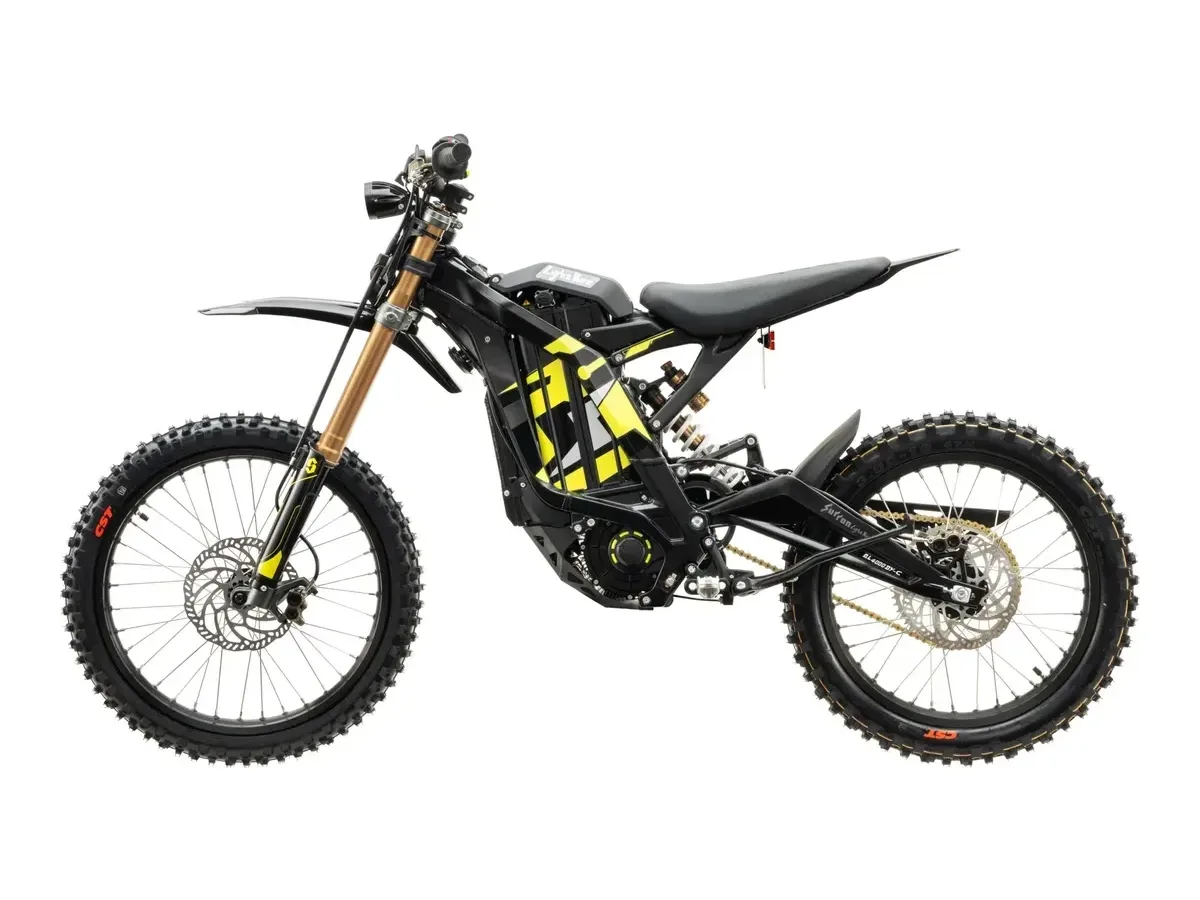
Now the Light Bee X: 6,000W peak from a 60V 40Ah pack. 6,000 / 60 = 100 amps at peak. The pack holds 60 x 40 = 2,400 Wh, so at full peak it would empty in about 24 minutes (2,400 / 6,000 = 0.4 hours). Peak power is something you use in bursts, which is why range depends on how you ride.
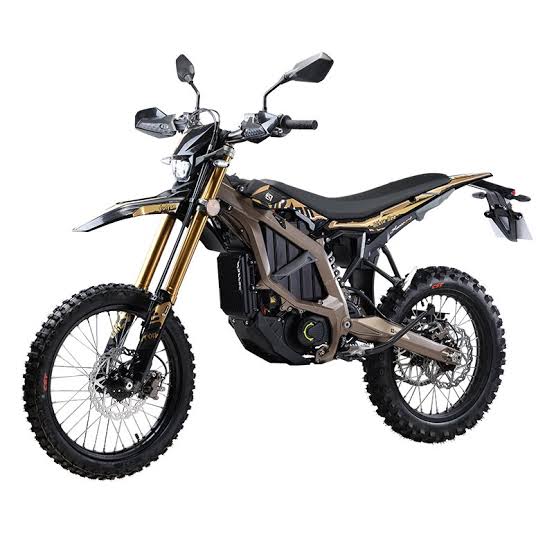
Sur-Ron Light Bee X (60V 40Ah)
Australia's most popular electric trail bike with 6kW peak power, 60V 40Ah battery, and lightweight 50kg dry weight.
Peak versus continuous ratings
Read the wording, because electric bike motors are often advertised by their best number. The RTR eBike Pro lists 250 Watts continuous. The Light Bee X lists 6,000 Watts as a peak. A peak figure is what the motor can deliver for short periods, while continuous is what it can sustain. They are not comparable numbers. Our explainer on Sur-Ron power specs goes deeper on peak versus rated figures.
Why every electric motorbike needs a controller
The controller is the electronic brain between battery and motor. It takes your throttle or pedal input and decides how much current reaches the motor, and it enforces limits on speed and power. A good motor with a weak controller wastes its potential, while a stronger controller can unlock more output, which is why upgrades are popular on dirt bikes. See our Torp TC500 vs BAC4000 comparison for what controller choices change.
Stocked examples from 250W to 6kW
| Model | Price | Motor | Battery | Notes |
|---|---|---|---|---|
| RTR eBike S Classic | $2,790 | 250W | 36V 13Ah (468 Wh) | 25 km/h, up to 70 km, 19 kg |
| ACE Adventure | $3,290 | 250W continuous | 48V 20Ah | 25 km/h assist road-compliant model, 80 N.m |
| ACE-X Demon S5 | $4,990 | 1,000W (off-road only) | 52V 25Ah | 95 N.m, up to 100 km |
| Sur-Ron Light Bee X | $6,490 | 6,000W peak | 60V 40Ah (2,400 Wh) | 75 km/h in off-road mode, 50 kg |
The jump from 250W to 1,000W changes what the bike is for. The 250W models stay within the road-compliant class. The ACE-X Demon is described as off-road only. The Light Bee X is an off-road performance bike.
RTR eBike S Classic Urban E-Bike (Road-Legal)
Classic step-through electric commuter from Australian brand RTR eBike. 250W, 25 km/h road-legal assist, and lightweight 19kg frame.
For the 250W commuter class, the RTR S Classic has a 468 Wh battery. At a steady 250W it could deliver roughly 1.9 hours of full-power assist (468 / 250), though real-world use varies because assist level, rider effort and terrain change the draw.
From commuters to an electric motocross motorcycle
At the far end of the scale, a competition motocross bike such as the Stark Varg Alpha 60HP lists 60 horsepower (45kW) and 820 Nm at the rear wheel. That is a different category from a 250W commuter, and it is built for tracks, not paths.
The same maths applies at every size, but the stakes rise with power. An electric dirt motorcycle needs a larger battery, heavier-duty wiring and more careful charging. For a closer look at these tiers see our guide to power classes explained.
Power classes and the rules that follow them
Road-going motors in the kilowatt range
Between pedal-assist bikes and dirt bikes sit road-going machines. An electric motorcycle moped such as the NIU NQi GT lists a 3,000W peak motor and a 70 km/h top speed, and the Vmoto Soco TC-Max lists 5,000W peak and 95 km/h. Shops group these under loose labels such as electric motorcycle bikes, but the motor class is what matters. An electric motorcycle for adults of this type has its own licence and registration rules, which your state authority sets, not the shop.
The 250W class and state rules
The 250W road-compliant class exists because rules limit motor power and assist speed. Limits differ around the world, as the Wikipedia page on electric bicycle laws outlines, so use your state's official pages for Australian rules, such as those from NSW and Queensland.
Most Ampd Bros e-bikes come as a 250W road-compliant model, with pedal assist limited to 25 km/h, or as an off-road model for private property. You choose at purchase, and the choice cannot be changed later. The ACE-X Demon is off-road only. Off-road electric dirt bikes belong on private property and designated off-road areas, and road use depends on the model and state rules. Our electric dirt bike vs e-bike comparison helps you decide which class you really need.
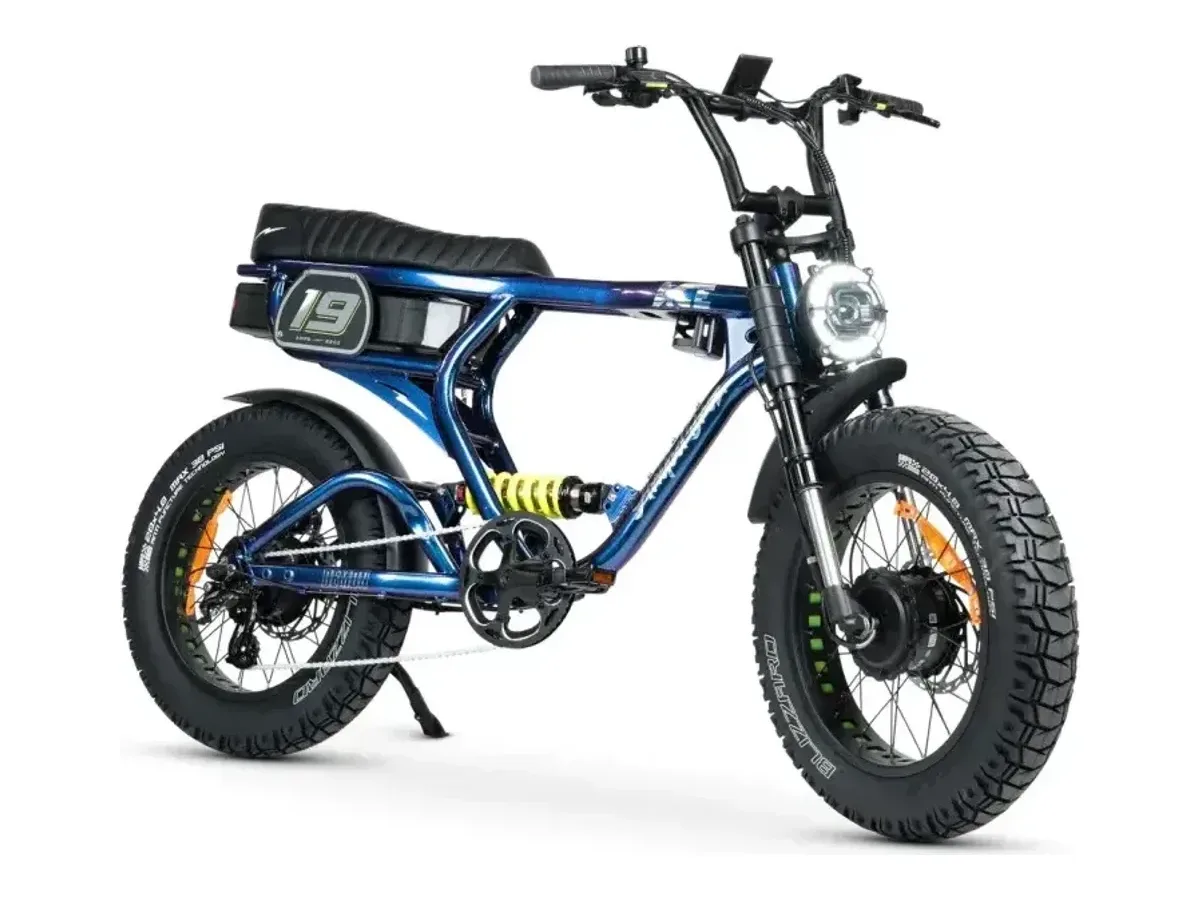
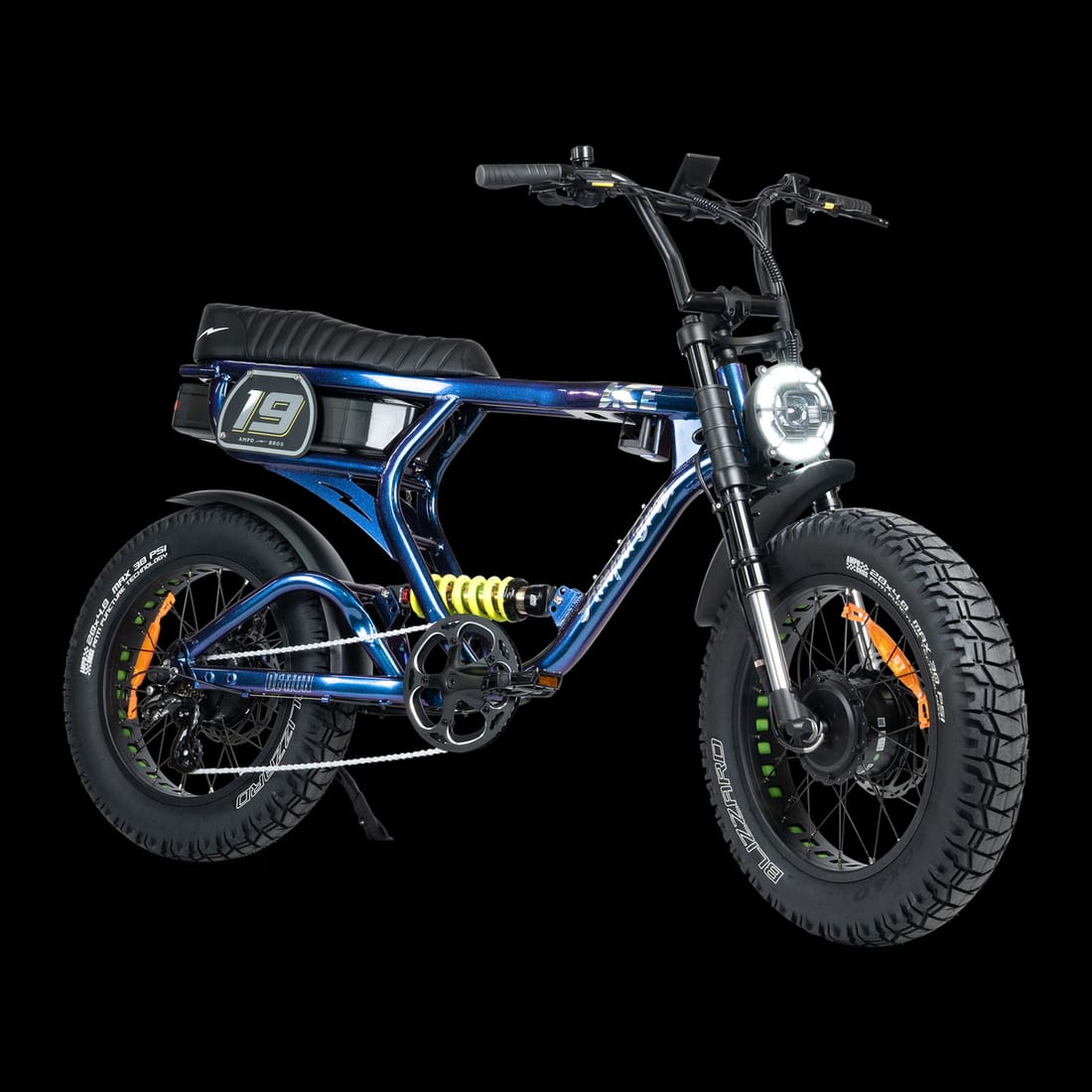
ACE-X Demon S5 Dual Electric Bike (52V 25Ah / 1,000W)
Ampd Bros fat tyre electric bike with 1,000W (off-road only), 52V 25Ah, range up to 100km.
Choosing the right motor for you
When you compare electric bike motors, match the motor to the job rather than chasing the biggest number.
- Commuting and errands: a 250W bike such as the RTR S Classic is light, simple and sits in the road-compliant class.
- Sand, trails and load: a fat tyre bike with more torque, like the ACE-X Demon, for private property use.
- Off-road performance: a 6kW bike like the Light Bee X for riders who want motorcycle-style acceleration.
If you are buying for an adult rider who wants real speed, the next step is understanding the class, battery and licence situation, which our guide to the electric motorbike for adults covers. Browse the electric bikes, fat tyre bikes or electric dirt bikes categories to see current prices.
Ebike for sale Australia: motor power and what you pay
If you are comparing an ebike for sale Australia wide, match the motor class to the price. The RTR eBike S Classic is $2,790 for a 250W road-compliant commuter. The ACE Adventure is $3,290 with 80 N.m of torque, and the Sur-Ron Light Bee X is $6,490 for off-road performance.
Orders over $1,500 ship free, and paying with crypto (BTC/USDT) or PayID takes 10% off instantly. Ampd Bros bikes such as the ACE carry supplier terms: a 2-year nationwide warranty on adult e-bikes and Toll Ipec delivery with signature required.
Ready to buy? Browse electric bicycles for sale Australia wide in the pedal-assist e-bike range, or see the fat tyre category for higher-torque options, and ask us a question first if you are unsure.
Frequently Asked Questions
What is the e bike price in Australia, and where can I buy one?
EDBA stocks pedal-assist e-bikes, fat tyre bikes and off-road electric dirt bikes, each with the motor power, battery and price shown on the product page. Road-compliant 250W models start at $2,790. Start with the electric bikes category for 250W models, or the dirt bike category for performance machines. Orders over $1,500 ship free.
Are there cheap electric bikes for sale that suit a beginner?
It depends on the rider and the use. For commuting, a 250W model from $2,790 is the lower-cost route. For private land, a lighter bike with controllable power, such as the Sur-Ron Light Bee X at 50 kg, is common on private property, but off-road bikes are for designated areas and private land only. Read the product page and our beginner guides first.
Do motocross-style electric bikes use hub motors?
Not usually. Performance machines tend to use a frame-mounted motor that drives the rear wheel through a chain, as the Light Bee X does. The larger motocross models such as the Stark Varg are built for competition and use far more power than a commuter motor, so check each listing for details.
How does an electric motorcycle differ from an e-bike?
It is motor-driven, with higher power and speed and usually a licence and registration requirement if it is road-going. A pedal-assist e-bike has a small 250W motor that helps you pedal. The class changes the rules, so check your state's official pages before riding on public roads.
What do people mean by an e-bike motorbike?
The term usually means something larger and faster than a standard pedal-assist bike. The RTR eBike S Classic uses a 250W motor and stops assisting at 25 km/h, while a bike like the Light Bee X lists 6,000W peak. The difference is power, battery size and where you can legally ride.