The debate between electric motorbike vs petrol in Australia has shifted decisively in 2026. With lithium battery costs dropping 40% since 2022, electric motor performance now matching petrol equivalents at comparable price points, and Australian electricity rates remaining stable, the economic case for electric motorbikes has never been stronger.
Purchase Price Comparison Entry-level 125cc petrol motorbike (Honda CB125E): $3,900. Equivalent electric commuter (RTR eBike S Classic): $5,900. The electric premium remains, but narrows significantly when you factor in the five-year total cost of ownership. Full-performance comparison: 450cc motocross petrol (KTM 450 SX-F): $15,900. Equivalent electric (Stark Varg EX 80HP): $16,900. Near price parity at the high end now exists.
Five-Year Running Cost Analysis Operating 10,000km per year for five years: - Petrol 125cc: Fuel ($1,800), servicing ($3,000), tyres ($1,200) = **$6,000 over 5 years** - Electric equivalent: Electricity ($275), servicing ($600), tyres ($1,200) = **$2,075 over 5 years** The electric motorbike saves approximately $3,925 in operating costs over five years — effectively covering the initial purchase premium. [Energy Australia's residential rate data](https://www.energyaustralia.com.au/) confirms average off-peak tariffs of $0.15–$0.22/kWh make electric charging dramatically cheaper than petrol.
Performance: Where Electric Now Wins Electric motors deliver 100% of maximum torque from 0 RPM — a physical advantage over petrol engines that must rev to their power band. In 0–60 km/h acceleration testing, the Stark Varg EX beats every comparable petrol motocross bike. The Sur-Ron Light Bee X outaccelerates 125cc petrol pit bikes from standstill. Performance parity now exists across almost all displacement classes.
Environmental Impact in Australia Australia's National Electricity Market has a carbon intensity of approximately 0.5 kg CO₂ per kWh (down from 0.8 in 2020 as renewable generation increases). Running an electric motorbike produces roughly 25g CO₂ per km — compared to 75g–110g CO₂ per km for petrol equivalents. As Australia's grid transitions further toward solar and wind, the electric motorbike's environmental advantage compounds annually. Learn more at [Electric Dirt Bike Australia](https://www.electricdirtbikeaustralia.com.au/).
Recommended Bike for Australian Trails
View Model Specs →Sur-Ron Light Bee X (60V 40Ah)
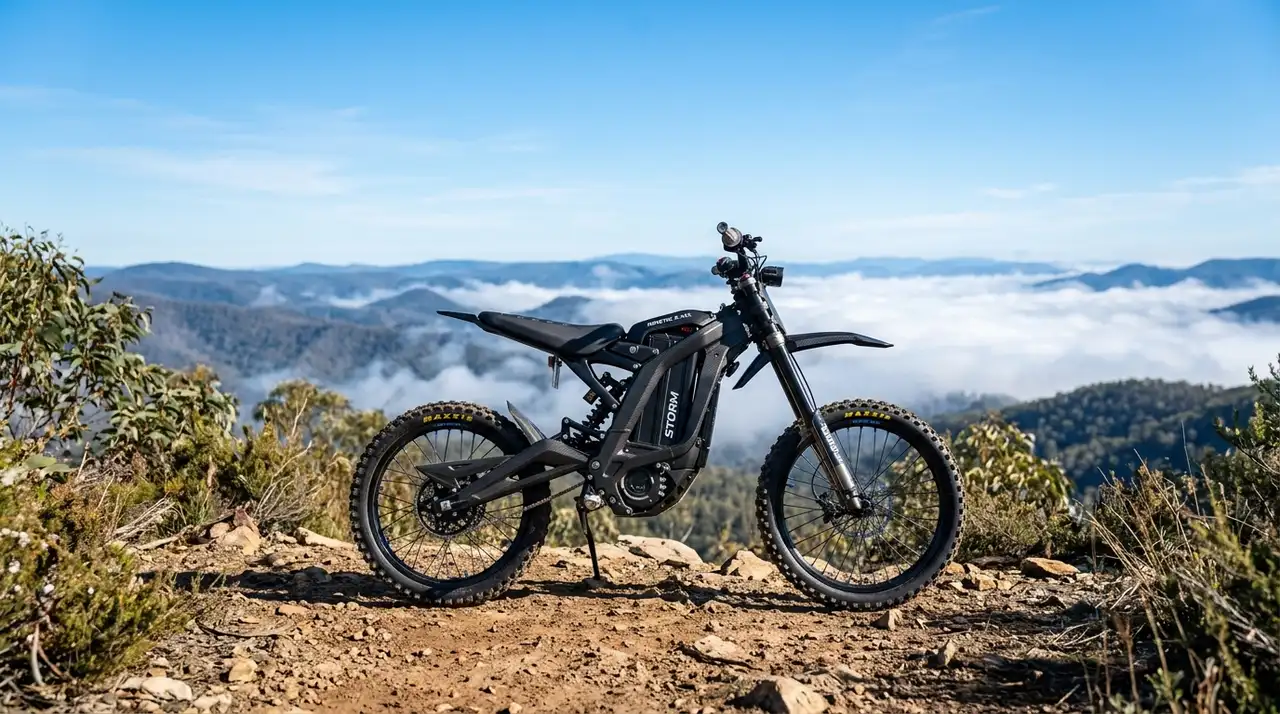
Australia's most popular electric trail bike with 6kW peak power, 60V 40Ah battery, and lightweight 50kg dry weight.